
Amtlicher EU-KennzeichnungsnameGlossareintrag 27040
SODIUM SULFITE
Dieser Eintrag bestätigt einen amtlichen gebräuchlichen Inhaltsstoffnamen für die EU-Kennzeichnung kosmetischer Mittel. Er bestätigt für sich genommen nicht, dass der Stoff zulässig, unbeschränkt oder sicher ist.
Globale Belegübersicht
Die ermittelte Identität hat übereinstimmende regulatorische Belege in 4 von 13 indizierten Marktdatensätzen: 4 Ländereinträge und 0 EU-Anhangseinträge. Jedes Ergebnis und jede Belegslücke ist unten aufgeführt.
Geprüfte Märkte
13
Märkte mit Belegen
4
Belegslücken
9
Ermittelte Kennungen
16
Ermittelte Stoffidentität
CAS:7757-83-710192-30-010196-04-010117-38-17773-03-77631-90-57681-57-416731-55-8
EC:231-821-4233-469-7233-484-9233-321-1231-870-1231-548-0231-673-0240-795-3
Einträge im Inhaltsstoffindex:
SODIUM SULFITE
Ph.-Eur.-Name: natrii sulfis
Kosmetische Funktionen: ANTIOXIDANT, HAIR WAVING OR STRAIGHTENING, PRESERVATIVE, REDUCING
Sodium sulphite
Beschränkungshinweis aus dem Verzeichnis: III/99 V/9
6 übereinstimmende oder gemeldete Namen
SODIUM SULFITEnatrii sulfisSodium sulfite, ammonium bisulfite, ammonium sulfite, potassium sulfite, potassium hydrogen sulfite, sodium bisulfite, sodium metabisulfite, potassium metabisulfiteInorganic sulfites and hydrogen sulfites e.g. sodium sulfiteInorganic sulphites and hydrogensulphites (4) Sodium Sulfite (CAS No 7757-83-7), Ammonium bisulfite (CAS No. 10192-30-0) Ammonium sulfite (CAS No. 10196-04-0), Potassium sulfite (CAS No.10117-38-1 ), Potassium hydrogen sulfite (CAS No.7773-03- 07 ), Sodium sulfite (CAS No. 7631-90-5), sodium Metabisulfite (CAS No.7681-57-4) potassium Metabisulfite (CAS No.16731-55-8)무기설파이트 및 하이드로젠설파이트류
Regulatorische Belege in allen 13 Märkten
Öffnen Sie jeden übereinstimmenden Eintrag, um Geltungsbereich, Konzentration, Bedingungen, Warnhinweise und die Version der amtlichen Quelle zu sehen.
Wischen oder scrollen Sie horizontal, um Datenabdeckung und nächste Schritte zu sehen.
| Markt | Ergebnis | Einträge | Datensatz | Bedeutung / nächster Schritt |
|---|---|---|---|---|
| European Union EU | Kein Treffer gefunden | 0 | Complete annex dataset Regulation (EC) 1223/2009 consolidated to 1 May 2026 | No annex match only means that these five annexes did not return a match; CosIng identity data and other EU obligations still need review. |
| Great Britain GB | Permitted list with conditions | 1Eintrag öffnen 1 | Complete consolidated annex dataset GB retained Regulation 1223/2009 schedules, effective 15 August 2026 | Prüfen Sie jeden verknüpften Eintrag und die genauen Bedingungen. |
| Canada CA | Kein Treffer gefunden | 0 | Complete Hotlist snapshot Health Canada Cosmetic Ingredient Hotlist, 13 August 2025 | The Hotlist is an administrative compliance tool, not an exhaustive safety approval list. |
| New Zealand NZ | Permitted list with conditions | 1Eintrag öffnen 1 | Complete schedules dataset Cosmetic Products Group Standard schedules effective 1 January 2026 | Prüfen Sie jeden verknüpften Eintrag und die genauen Bedingungen. |
| ASEAN ASEAN | Permitted list with conditions | 1Eintrag öffnen 1 | Complete regional annex dataset ASEAN Cosmetic Directive annexes 2026-1, 22 June 2026 | Prüfen Sie jeden verknüpften Eintrag und die genauen Bedingungen. |
| China CN | Kein Treffer gefunden | 0 | Complete prohibited catalogues plus official-source workflow NMPA 2021 banned catalogues plus dynamic IECIC List I/List II system current since 2025 | IECIC listing is not blanket approval; absence may require the new cosmetic ingredient route, and restrictions are checked separately. |
| Japan JP | Kein Treffer gefunden | 0 | Complete Standards appendices dataset MHLW Standards for Cosmetics official English source and Japanese amendments checked for the imported snapshot | The Japanese text and subsequent notices are canonical; no local match is not a product-compliance conclusion. |
| South Korea KR | Restricted | 1Eintrag öffnen 1 | Complete current appendix dataset MFDS Notice 2026-19, effective 18 March 2026 | Prüfen Sie jeden verknüpften Eintrag und die genauen Bedingungen. |
| United States US | Kein Treffer gefunden | 0 | Complete enumerated federal ingredient rules eCFR Title 21 issue date 27 August 2026 | FDA has no general approved-cosmetic-ingredient catalogue; absence from these sections is not approval or proof of safety. |
| Australia AU | Kein Treffer gefunden | 0 | Complete cosmetic-relevant Poisons Standard subset plus official workflow Therapeutic Goods (Poisons Standard—June 2026) Instrument 2026 | An AICIS Inventory match is not cosmetic approval; no Inventory match can indicate a new, exempted, reported or confidential introduction. |
| Brazil BR | Kein Treffer gefunden | 0 | Complete prohibited dataset plus current restricted-list workflow ANVISA RDC 1.029/2026 and RDC 1.030/2026, published 15 June 2026 | RDC 1.030/2026 amends rather than replaces the prohibited baseline, and the second restricted-list revision was still under consultation in July 2026. |
| India IN | Kein Treffer gefunden | 0 | Complete current Part 2 dataset plus official workflow for Parts 1, 3 and 4 Cosmetics Rules 2020 plus current BIS IS 4707 parts (1:2020, 2:2025, 3:2025, 4:2022) | The standards are separate controlled publications; absence from a locally indexed excerpt is not permission. |
| Saudi Arabia SA | Kein Treffer gefunden | 0 | Complete official list index SFDA live prohibited/restricted lists, snapshot 30 August 2026 | No list match is not permission; Gulf/SFDA product, claim, notification and technical requirements still apply. |
Keine Marktzeilen entsprechen diesem Filter.
Übereinstimmende Markteinträge und Bedingungen
New Zealand
Cosmetic Products Group Standard schedules effective 1 January 2026ASEAN
ASEAN Cosmetic Directive annexes 2026-1, 22 June 2026South Korea
MFDS Notice 2026-19, effective 18 March 2026Chemische Identität und Eigenschaften
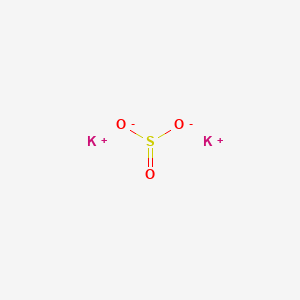
CAS 10117-38-1PubChem CID 24958
Potassium Sulfite
- IUPAC-Name
- dipotassium;sulfite
- Summenformel
- K2O3S
- Molekulargewicht
- 158.26 g/mol
- Exakte Masse
- 157.88422800 Da
- Topologische polare Oberfläche
- 82,4 Ų
- Wasserstoffbrücken-Donoren
- 0
- Wasserstoffbrücken-Akzeptoren
- 4
- Kovalente Einheiten
- 3
- Definierte Stereozentren
- 0
Auch bekannt als
Dipotassium sulfitePotassium sulphiteSulfurous acid, dipotassium saltPotassium sulfite (K2SO3)UNII-015KZC652ESulfurous acid, potassium saltHSDB 5052015KZC652E
16 weitere gemeldete Namen
EINECS 233-321-1DIPOTASSIUM SULPHITEPOTASSIUM SULFITE [MI]INS NO.225POTASSIUM SULFITE [FCC]POTASSIUM SULFITE [HSDB]INS-225EC 233-321-1E-225RefChem:175607POTASSIUM SULFITE [INCI]PotassiumsulfiteSulfurous acid, potassium salt (1:2)Potassium sulfite(IV)KaliumsulfitE225
Kennungen in externen Datenbanken
- EPA DTXSID:DTXSID80889532
Belege aus weiteren wissenschaftlichen Datenbanken
NIH PubChem PUG-View
Exakter Kennungstreffer24958
Attributed physical-property, hazard, environmental and use annotations.
- Physical Description: Liquid Quelle: EPA Chemical Data Reporting (CDR)
- Physical Description: Dihydrate: White solid; Slowly oxidized by air to sulfate; [Merck Index] White powder; [MSDSonline] Quelle: Haz-Map, Information on Hazardous Chemicals and Occupational Diseases
- Solubility: White crystals or crystalline powder; sol in about 3.5 parts water; decomposed by diluted acids with evolution of sulfur dioxide; pH about 8 /dihydrate/ Quelle: Hazardous Substances Data Bank (HSDB)
- Solubility: White-yellowish, hexagonal form; insol in ammonia; slightly sol in alcohol /dihydrate/ Quelle: Hazardous Substances Data Bank (HSDB)
- Note: This chemical does not meet GHS hazard criteria for 81.5% (242 of 297) of all reports. Quelle: European Chemicals Agency (ECHA)
- Signal: Warning Quelle: European Chemicals Agency (ECHA)
- GHS Hazard Statements: H315 (16.5%): Causes skin irritation [Warning Skin corrosion/irritation]; H319 (18.2%): Causes serious eye irritation [Warning Serious eye damage/eye irritation]; H335 (16.2%): May cause respiratory irritation [Warning Specific target organ toxicity, single exposure; Respiratory tract irritation] Quelle: European Chemicals Agency (ECHA)
- Precautionary Statement Codes: P261, P264, P264+P265, P271, P280, P302+P352, P304+P340, P305+P351+P338, P319, P321, P332+P317, P337+P317, P362+P364, P403+P233, P405, and P501 (click each P-code to see the statement) Quelle: European Chemicals Agency (ECHA)
- ECHA C&L Notifications Summary: Aggregated GHS information provided per 297 reports by companies from 10 notifications to the ECHA C&L Inventory. Each notification may be associated with multiple companies.; Reported as not meeting GHS hazard criteria per 242 of 297 reports by companies.; There are 7 notifications provided by 55 of 297 reports by companies with hazard statement code(s).; Information may vary between notifications depending on impurities, additives, and other factors. The percentage value in parenthesis indicates the notified classification ratio from companies that provide hazard codes. Only hazard codes with percentage values above 10% are shown. For more detailed information, please visit ECHA C&L website. Quelle: European Chemicals Agency (ECHA)
- Signal: Danger Quelle: Hazardous Chemical Information System (HCIS), Safe Work Australia
- GHS Hazard Statements: H302: Harmful if swallowed [Warning Acute toxicity, oral]; H318: Causes serious eye damage [Danger Serious eye damage/eye irritation] Quelle: Hazardous Chemical Information System (HCIS), Safe Work Australia
- Precautionary Statement Codes: P264, P264+P265, P270, P280, P301+P317, P305+P354+P338, P317, P330, and P501 (click each P-code to see the statement) Quelle: Hazardous Chemical Information System (HCIS), Safe Work Australia
- Cosmetic Ingredient Review Finding(s): Safe in the present practices of use and concentration. Ingredient, concentration, and use information are available in documents discoverable at https://cir-reports.cir-safety.org Quelle: Cosmetic Ingredient Review (CIR)
- Consumer Uses: Etching agent; Soil amendments (fertilizers) Quelle: EPA Chemical Data Reporting (CDR)
- Industry Uses: Reducing agent; Soil amendments (fertilizers) Quelle: EPA Chemical Data Reporting (CDR)
- Cosmetic Ingredient Review Link: CIR ingredient: Potassium Sulfite Quelle: Cosmetic Ingredient Review (CIR)
- Sources/Uses: Used in photography, food and cosmetics (preservative and antioxidant), and drugs (cathartic and diuretic); [HSDB] Quelle: Haz-Map, Information on Hazardous Chemicals and Occupational Diseases
- Industrial Processes with risk of exposure: Photographic Processing [Category: Other] Quelle: Haz-Map, Information on Hazardous Chemicals and Occupational Diseases
- Uses: Photography; preservative and antioxidant in foods Quelle: Hazardous Substances Data Bank (HSDB)
- Uses: Medication: cathartic, diuretic Quelle: Hazardous Substances Data Bank (HSDB)
- Uses: COMPONENT OF PHOTOGRAPHIC DEVELOPERS; FOOD ADDITIVE (EG, PRESERVATIVE & ANTIOXIDANT); INGREDIENT IN COSMETICS (EG, HAIR PREPARATIONS) Quelle: Hazardous Substances Data Bank (HSDB)
Zugeordnet durch: Existing checksum-valid CAS to unique PubChem CID match. Abgerufen: 2026-08-31. Quelleneintrag öffnen
Wissenschaftliche Klassifizierungen und Gefahrenannotationen liefern Kontext und ersetzen nicht die oben gezeigte marktspezifische regulatorische Entscheidung.
Weitere Quellenabdeckung und Trefferstatus
| Quelle | Ergebnis | Geprüft |
|---|---|---|
| EMBL-EBI ChEBI | Kein exakter Eintrag | 2026-08-31 |
| NIH PubChem PUG-View | Exakter Treffer | 2026-08-31 |
Ein erfasster Nicht-Treffer ist ein nützlicher Beleg dafür, dass die Quelle geprüft wurde; er ist keine Behauptung, dass der Stoff anderswo nicht existiert.
Am 2026-09-02 von NIH PubChem durch prüfsummengültigen CAS-Abgleich abgerufen. Chemische Eigenschaften ersetzen nicht die regulatorische Entscheidung auf dieser Seite.
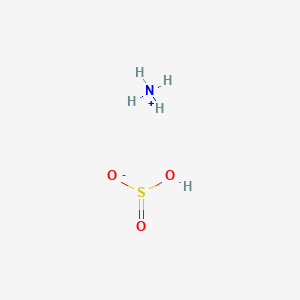
CAS 10192-30-0PubChem CID 10441651
Ammonium Bisulfite
Ammonium bisulfite is colorless crystals which are soluble in water. It is noncombustible. It is corrosive to aluminum. It is a strong irritant to skin and mucous membranes. It is toxic by skin absorption. — CAMEO Chemicals
- IUPAC-Name
- azanium hydrogen sulfite
- Summenformel
- H5NO3S
- Molekulargewicht
- 99.11 g/mol
- Exakte Masse
- 98.99901420 Da
- Topologische polare Oberfläche
- 80,6 Ų
- Wasserstoffbrücken-Donoren
- 2
- Wasserstoffbrücken-Akzeptoren
- 4
- Kovalente Einheiten
- 2
- Definierte Stereozentren
- 0
Auch bekannt als
Ammonium hydrogen sulfiteAmmonium acid sulfiteAmmonium monosulfiteMonoammonium sulfiteAmmonium hydrosulfite8MW949D9GESulfurous acid, monoammonium saltAmmonium sulfite, hydrogen
16 weitere gemeldete Namen
Ammonium bisulfite (NH4HSO3)RefChem:112138233-469-7azanium;hydrogen sulfiteAmmonium hydrogensulphiteAmmonium Bisulfite - In waterSulfurous acid, ammonium salt (1:1)Ammoniumbisulfitammonium bisulphiteammonium hydrogensulfiteUNII-8MW949D9GEHSDB 486AMMONIUM BISULFITE [MI]AMMONIUM BISULFITE [HSDB]Ammonium bisulfite - 45% In waterEINECS 233-469-7
Kennungen in externen Datenbanken
- EPA DTXSID:DTXSID1050462
Belege aus weiteren wissenschaftlichen Datenbanken
NIH PubChem PUG-View
Exakter Kennungstreffer10441651
Attributed physical-property, hazard, environmental and use annotations.
- Boiling Point: Sublimates at 302.0 °F (USCG, 1999) Quelle: CAMEO Chemicals
- Boiling Point: at 101.1kPa: 100 °C Quelle: ILO-WHO International Chemical Safety Cards (ICSCs)
- Color/Form: Colorless crystals Quelle: Hazardous Substances Data Bank (HSDB)
- Color/Form: Colorless to yellow Quelle: Hazardous Substances Data Bank (HSDB)
- Density: 2.03 at 68 °F 1.40 (72% aqueous solution) (USCG, 1999) - Denser than water; will sink Quelle: CAMEO Chemicals
- Density: Sp gr: 2.03 Quelle: Hazardous Substances Data Bank (HSDB)
- Density: Relative density (water = 1): 2.0 Quelle: ILO-WHO International Chemical Safety Cards (ICSCs)
- Melting Point: -10 °C Quelle: ILO-WHO International Chemical Safety Cards (ICSCs)
- Physical Description: Ammonium bisulfite is colorless crystals which are soluble in water. It is noncombustible. It is corrosive to aluminum. It is a strong irritant to skin and mucous membranes. It is toxic by skin absorption. Quelle: CAMEO Chemicals
- Physical Description: Ammonium bisulfite is a solution of yellow crystals. It is a strong irritant to skin and mucous membranes. It is toxic by skin absorption. It may be corrosive to metals. Quelle: CAMEO Chemicals
- Physical Description: Liquid Quelle: EPA Chemical Data Reporting (CDR)
- Physical Description: Colorless to yellow solid; [ICSC] Sold only in solution; [Merck Index] Available as 44% and 68% solution; [MSDSonline] Quelle: Haz-Map, Information on Hazardous Chemicals and Occupational Diseases
- Physical Description: COLOURLESS-TO-YELLOW LIQUID OR CRYSTALS WITH CHARACTERISTIC ODOUR. Quelle: ILO-WHO International Chemical Safety Cards (ICSCs)
- Solubility: In water: 267 g/100 ml @ 10 °C, 620 G/100 ml @ 60 °C Quelle: Hazardous Substances Data Bank (HSDB)
- Solubility: In water: 71.8 g/100 ml @ 0 deg Quelle: Hazardous Substances Data Bank (HSDB)
- Solubility: Solubility in water, g/100ml at 10 °C: 267 (very good) Quelle: ILO-WHO International Chemical Safety Cards (ICSCs)
- Exposure Routes: The substance can be absorbed into the body by ingestion. Quelle: ILO-WHO International Chemical Safety Cards (ICSCs)
- First Aid: Call a physician.; EYES: Flush with water.; SKIN: Flush exposed area with water. (USCG, 1999) Quelle: CAMEO Chemicals
- First Aid: Excerpt from ERG Guide 154 [Substances - Toxic and/or Corrosive (Non-Combustible)]:; Refer to the "General First Aid" section. Specific First Aid: For corrosives, in case of contact, immediately flush skin or eyes with running water for at least 30 minutes. Additional flushing may be required. (ERG, 2024) Quelle: CAMEO Chemicals
- Note: This chemical does not meet GHS hazard criteria for 3.7% (6 of 162) of reports. Quelle: European Chemicals Agency (ECHA)
- Signal: Warning Quelle: European Chemicals Agency (ECHA)
- GHS Hazard Statements: H315 (38.3%): Causes skin irritation [Warning Skin corrosion/irritation]; H319 (94.4%): Causes serious eye irritation [Warning Serious eye damage/eye irritation]; H335 (37.7%): May cause respiratory irritation [Warning Specific target organ toxicity, single exposure; Respiratory tract irritation] Quelle: European Chemicals Agency (ECHA)
- Precautionary Statement Codes: P261, P264, P264+P265, P271, P280, P302+P352, P304+P340, P305+P351+P338, P319, P321, P332+P317, P337+P317, P362+P364, P403+P233, P405, and P501 (click each P-code to see the statement) Quelle: European Chemicals Agency (ECHA)
- ECHA C&L Notifications Summary: Aggregated GHS information provided per 162 reports by companies from 11 notifications to the ECHA C&L Inventory. Each notification may be associated with multiple companies.; Reported as not meeting GHS hazard criteria per 6 of 162 reports by companies.; There are 10 notifications provided by 156 of 162 reports by companies with hazard statement code(s).; Information may vary between notifications depending on impurities, additives, and other factors. The percentage value in parenthesis indicates the notified classification ratio from companies that provide hazard codes. Only hazard codes with percentage values above 10% are shown. For more detailed information, please visit ECHA C&L website. Quelle: European Chemicals Agency (ECHA)
- Signal: Danger Quelle: Hazardous Chemical Information System (HCIS), Safe Work Australia
- GHS Hazard Statements: H302: Harmful if swallowed [Warning Acute toxicity, oral]; H318: Causes serious eye damage [Danger Serious eye damage/eye irritation] Quelle: Hazardous Chemical Information System (HCIS), Safe Work Australia
- Precautionary Statement Codes: P264, P264+P265, P270, P280, P301+P317, P305+P354+P338, P317, P330, and P501 (click each P-code to see the statement) Quelle: Hazardous Chemical Information System (HCIS), Safe Work Australia
- Cosmetic Ingredient Review Finding(s): Safe in the present practices of use and concentration. Ingredient, concentration, and use information are available in documents discoverable at https://cir-reports.cir-safety.org Quelle: Cosmetic Ingredient Review (CIR)
- Consumer Uses: Reducing agent; Soil amendments (fertilizers); Processing aids not otherwise specified Quelle: EPA Chemical Data Reporting (CDR)
- Industry Uses: Soil amendments (fertilizers); Reducing agent; Other; Intermediate; Solids separation (precipitating) agent, not otherwise specified; Processing aids not otherwise specified Quelle: EPA Chemical Data Reporting (CDR)
- Cosmetic Ingredient Review Link: CIR ingredient: Ammonium Bisulfite Quelle: Cosmetic Ingredient Review (CIR)
- Sources/Uses: Used in preservatives, fertilizers, grain treatments, explosives, paper production, and corrosion control in drilling fluids; [HSDB] Also used in photography, food preservation, and the gold industry (cyanide destruction process); [MSDSonline] Quelle: Haz-Map, Information on Hazardous Chemicals and Occupational Diseases
- Industrial Processes with risk of exposure: Pulp and Paper Processing [Category: Industry]; Using Disinfectants or Biocides [Category: Clean]; Photographic Processing [Category: Other] Quelle: Haz-Map, Information on Hazardous Chemicals and Occupational Diseases
- Uses: SOURCE OF SULFUR IN FLUID FERTILIZERS. Quelle: Hazardous Substances Data Bank (HSDB)
- Uses: IN LIQ ANTIMICROBIAL TREATMENT FOR STORAGE GRAIN. Quelle: Hazardous Substances Data Bank (HSDB)
- Uses: Manufacture of industrial explosives & blasting agents. Quelle: Hazardous Substances Data Bank (HSDB)
- Uses: Used in sulfite pulping processes. Quelle: Hazardous Substances Data Bank (HSDB)
- Uses: For more Uses (Complete) data for AMMONIUM BISULFITE (6 total), please visit the HSDB record page. Quelle: Hazardous Substances Data Bank (HSDB)
Zugeordnet durch: Existing checksum-valid CAS to unique PubChem CID match. Abgerufen: 2026-08-31. Quelleneintrag öffnen
Wissenschaftliche Klassifizierungen und Gefahrenannotationen liefern Kontext und ersetzen nicht die oben gezeigte marktspezifische regulatorische Entscheidung.
Weitere Quellenabdeckung und Trefferstatus
| Quelle | Ergebnis | Geprüft |
|---|---|---|
| EMBL-EBI ChEBI | Kein exakter Eintrag | 2026-08-31 |
| NIH PubChem PUG-View | Exakter Treffer | 2026-08-31 |
Ein erfasster Nicht-Treffer ist ein nützlicher Beleg dafür, dass die Quelle geprüft wurde; er ist keine Behauptung, dass der Stoff anderswo nicht existiert.
Am 2026-09-02 von NIH PubChem durch prüfsummengültigen CAS-Abgleich abgerufen. Chemische Eigenschaften ersetzen nicht die regulatorische Entscheidung auf dieser Seite.
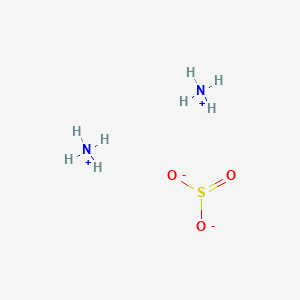
CAS 10196-04-0PubChem CID 25041
Ammonium Sulfite
Ammonium sulfite is a colorless crystalline solid. The primary hazard is the threat to the environment. Immediate steps should be taken to limit its spread to the environment. It is used in the manufacture of other chemicals, in medicine, and photography. — CAMEO Chemicals
- IUPAC-Name
- diazanium;sulfite
- Summenformel
- H8N2O3S
- Molekulargewicht
- 116.14 g/mol
- Exakte Masse
- 116.02556330 Da
- Topologische polare Oberfläche
- 84,4 Ų
- Wasserstoffbrücken-Donoren
- 2
- Wasserstoffbrücken-Akzeptoren
- 4
- Kovalente Einheiten
- 3
- Definierte Stereozentren
- 0
Auch bekannt als
Diammonium sulfiteAmmonium sulphiteDiammonium sulfonate8LF589Y5GDSulfurous acid, diammonium saltSulfurous acid, ammonium saltRefChem:112210233-484-9
13 weitere gemeldete Namen
ammoniumsulfiteAmmoniumsulfitdiazanium;suliteAmmonium sulfonateUNII-8LF589Y5GDAMMONIUM SULFITE [MI]AMMONIUM SULFITE [HSDB]HSDB 1426CHEBI:186946EINECS 233-484-9Sulfurous acid ammonium salt (1:2)Sulfurous acid, ammonium salt (1:2)EC 233-484-9
Kennungen in externen Datenbanken
- ChEBI:CHEBI:186946
- EPA DTXSID:DTXSID2064991
Belege aus weiteren wissenschaftlichen Datenbanken
EMBL-EBI ChEBI
Exakter KennungstrefferCHEBI:186946
Diammonium sulfite
- Rezeptur
- 2H4N.O3S
- Durchschnittsmasse
- 116.142 g/mol
- Monoisotopische Masse
- 116.02556 Da
- Formale Ladung
- 0
- p-block molecular entity — is a (CHEBI:33675)
- sulfite salt — is a (CHEBI:48857)
- p-block molecular entity — is a (CHEBI:33675)
- sulfite salt — is a (CHEBI:48857)
Weitere kuratierte Namen
diazanium;sulite
Querverweise aus dieser Quelle
- CAS: 10196-04-0 — ChemIDplus
- MANUAL_X_REF: 23404 — ChemSpider
Zugeordnet durch: Exact CAS cross-reference in the ChEBI compound record. Abgerufen: 2026-08-31. Quelleneintrag öffnen
NIH PubChem PUG-View
Exakter Kennungstreffer25041
Attributed physical-property, hazard, environmental and use annotations.
- Color/Form: White, solid Quelle: Hazardous Substances Data Bank (HSDB)
- Density: greater than 1.1 at 68 °F (USCG, 1999) Quelle: CAMEO Chemicals
- Density: 1.41 @25 °C Quelle: PAC Chemical Database, U.S. Department of Energy
- Odor: Odorless Quelle: Hazardous Substances Data Bank (HSDB)
- Physical Description: Ammonium sulfite is a colorless crystalline solid. The primary hazard is the threat to the environment. Immediate steps should be taken to limit its spread to the environment. It is used in the manufacture of other chemicals, in medicine, and photography. Quelle: CAMEO Chemicals
- Physical Description: Large Crystals; Dry Powder; Liquid Quelle: EPA Chemical Data Reporting (CDR)
- Physical Description: White odorless solid; [HSDB] White odorless crystalline solid; [MSDSonline] Quelle: Haz-Map, Information on Hazardous Chemicals and Occupational Diseases
- Solubility: Soluble in water, almost insoluble in alcohol, acetone. Quelle: Hazardous Substances Data Bank (HSDB)
- pH: Its aq soln is alkaline to litmus. /ammonium sulfate monohydrate/ Quelle: Hazardous Substances Data Bank (HSDB)
- First Aid: INHALATION: move to fresh air.; INGESTION: give large amount of water; get medical attention.; EYES: flush with water for 15 min.; SKIN: flush with water. (USCG, 1999) Quelle: CAMEO Chemicals
- Note: This chemical does not meet GHS hazard criteria for 71.1% (133 of 187) of all reports. Quelle: European Chemicals Agency (ECHA)
- Signal: Danger Quelle: European Chemicals Agency (ECHA)
- GHS Hazard Statements: H314 (13.4%): Causes severe skin burns and eye damage [Danger Skin corrosion/irritation]; H315 (15%): Causes skin irritation [Warning Skin corrosion/irritation]; H319 (15.5%): Causes serious eye irritation [Warning Serious eye damage/eye irritation]; H335 (10.2%): May cause respiratory irritation [Warning Specific target organ toxicity, single exposure; Respiratory tract irritation] Quelle: European Chemicals Agency (ECHA)
- Precautionary Statement Codes: P260, P261, P264, P264+P265, P271, P280, P301+P330+P331, P302+P352, P302+P361+P354, P304+P340, P305+P351+P338, P305+P354+P338, P316, P319, P321, P332+P317, P337+P317, P362+P364, P363, P403+P233, P405, and P501 (click each P-code to see the statement) Quelle: European Chemicals Agency (ECHA)
- ECHA C&L Notifications Summary: Aggregated GHS information provided per 187 reports by companies from 6 notifications to the ECHA C&L Inventory. Each notification may be associated with multiple companies.; Reported as not meeting GHS hazard criteria per 133 of 187 reports by companies.; There are 5 notifications provided by 54 of 187 reports by companies with hazard statement code(s).; Information may vary between notifications depending on impurities, additives, and other factors. The percentage value in parenthesis indicates the notified classification ratio from companies that provide hazard codes. Only hazard codes with percentage values above 10% are shown. For more detailed information, please visit ECHA C&L website. Quelle: European Chemicals Agency (ECHA)
- Signal: Danger Quelle: Hazardous Chemical Information System (HCIS), Safe Work Australia
- GHS Hazard Statements: H302: Harmful if swallowed [Warning Acute toxicity, oral]; H318: Causes serious eye damage [Danger Serious eye damage/eye irritation] Quelle: Hazardous Chemical Information System (HCIS), Safe Work Australia
- Precautionary Statement Codes: P264, P264+P265, P270, P280, P301+P317, P305+P354+P338, P317, P330, and P501 (click each P-code to see the statement) Quelle: Hazardous Chemical Information System (HCIS), Safe Work Australia
- Cosmetic Ingredient Review Finding(s): Safe in the present practices of use and concentration. Ingredient, concentration, and use information are available in documents discoverable at https://cir-reports.cir-safety.org Quelle: Cosmetic Ingredient Review (CIR)
- Consumer Uses: Soil amendments (fertilizers); Reducing agent; Processing aids not otherwise specified Quelle: EPA Chemical Data Reporting (CDR)
- Industry Uses: Intermediate; Soil amendments (fertilizers); Reducing agent; Preservative; Processing aids not otherwise specified Quelle: EPA Chemical Data Reporting (CDR)
- Cosmetic Ingredient Review Link: CIR ingredient: Ammonium Sulfite Quelle: Cosmetic Ingredient Review (CIR)
- Sources/Uses: Used in photography and in the production of caramel, refractory bricks, lubricants, medicines, permanent wave solutions, ammonium thiosulfite, and ammonium chloride; [HSDB] Quelle: Haz-Map, Information on Hazardous Chemicals and Occupational Diseases
- Industrial Processes with risk of exposure: Photographic Processing [Category: Other]; Dressing Hair [Category: Other] Quelle: Haz-Map, Information on Hazardous Chemicals and Occupational Diseases
- Uses: IN PRODN OF CARAMEL. Quelle: Hazardous Substances Data Bank (HSDB)
- Uses: In photography; as reducing agent; in bricks for blast furnace linings; in lubricants for metal cold-working. Quelle: Hazardous Substances Data Bank (HSDB)
- Uses: ... Medicine, permanent wave solns. /Ammonium sulfite monohydrate/ Quelle: Hazardous Substances Data Bank (HSDB)
- Uses: Used in production of ammonium thiosulfite. Quelle: Hazardous Substances Data Bank (HSDB)
- Uses: For more Uses (Complete) data for AMMONIUM SULFITE (6 total), please visit the HSDB record page. Quelle: Hazardous Substances Data Bank (HSDB)
Zugeordnet durch: Existing checksum-valid CAS to unique PubChem CID match. Abgerufen: 2026-08-31. Quelleneintrag öffnen
Wissenschaftliche Klassifizierungen und Gefahrenannotationen liefern Kontext und ersetzen nicht die oben gezeigte marktspezifische regulatorische Entscheidung.
Weitere Quellenabdeckung und Trefferstatus
| Quelle | Ergebnis | Geprüft |
|---|---|---|
| EMBL-EBI ChEBI | Exakter Treffer | 2026-08-31 |
| NIH PubChem PUG-View | Exakter Treffer | 2026-08-31 |
Ein erfasster Nicht-Treffer ist ein nützlicher Beleg dafür, dass die Quelle geprüft wurde; er ist keine Behauptung, dass der Stoff anderswo nicht existiert.
Am 2026-09-02 von NIH PubChem durch prüfsummengültigen CAS-Abgleich abgerufen. Chemische Eigenschaften ersetzen nicht die regulatorische Entscheidung auf dieser Seite.
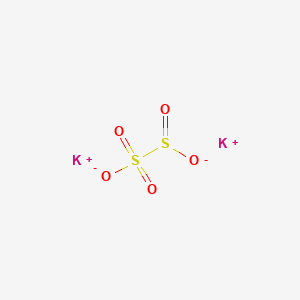
CAS 16731-55-8PubChem CID 28019
Potassium Metabisulfite
Potassium metabisulfite appears as a white granular or powdery solid with a sharp odor of sulfur dioxide. Decomposes at 150 to 190 °C. Density 2.3 g / cm3. Contact severely irritates skin, eyes, and mucous membranes. Low toxicity. Used as a food preservative and an antioxidant. — CAMEO Chemicals
- Summenformel
- K2O5S2
- Molekulargewicht
- 222.33 g/mol
- Exakte Masse
- 221.8461284 Da
- Topologische polare Oberfläche
- 125,0 Ų
- Wasserstoffbrücken-Donoren
- 0
- Wasserstoffbrücken-Akzeptoren
- 6
- Kovalente Einheiten
- 3
- Definierte Stereozentren
- 0
Auch bekannt als
Potassium disulfiteDipotassium pyrosulfiteDipotassium disulfiteSobisuDipotassium metabisulfitepotassium metabisulphitePotassium disulfite (K2S2O5)Potassium pentaoxodisulfate
16 weitere gemeldete Namen
Pyrosulfurous acid, dipotassium saltIns-224Potassium metabisulfite (e 224)65OE787Q7WE-224RefChem:867887240-795-3Potassium pyrosulfitePotassium metabisulfite [NF]Potassium metabisulfite (NF)Dipotassium disulphiteCCRIS 1427HSDB 5062EINECS 240-795-3KaliumpyrosulfitUNII-65OE787Q7W
Kennungen in externen Datenbanken
- ChEMBL:CHEMBL2106901
- EPA DTXSID:DTXSID1021293
Am 2026-09-02 von NIH PubChem durch prüfsummengültigen CAS-Abgleich abgerufen. Chemische Eigenschaften ersetzen nicht die regulatorische Entscheidung auf dieser Seite.
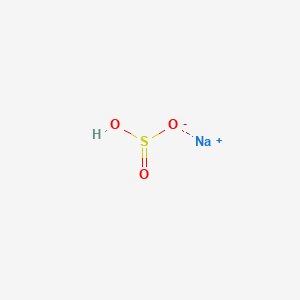
CAS 7631-90-5PubChem CID 23665763
Sodium Bisulfite
Sodium hydrogensulfite is an inorganic sodium salt having hydrogensulfite as the counterion. It has a role as a mutagen, an allergen, a reducing agent, a food antioxidant and a food colour retention agent. It is an inorganic sodium salt and a sulfite salt. It contains a hydrogensulfite. — ChEBI
- IUPAC-Name
- sodium hydrogen sulfite
- Summenformel
- HNaO3S
- Molekulargewicht
- 104.06 g/mol
- Exakte Masse
- 103.95440935 Da
- Topologische polare Oberfläche
- 79,6 Ų
- Wasserstoffbrücken-Donoren
- 1
- Wasserstoffbrücken-Akzeptoren
- 4
- Kovalente Einheiten
- 2
- Definierte Stereozentren
- 0
Auch bekannt als
sodium hydrogensulfiteSodium bisulphiteMonosodium sulfiteSulfurous acid, monosodium saltSodium sulhydrateUantax SBSHydrogen sodium sulfiteHydrogen sulfite sodium
16 weitere gemeldete Namen
Monosodic sulphiteSodium hydrosulfite(DOT)Bisulfite de sodiumSodium bisulfite (1:1)Sodium sulfite (NaHSO3)Sodium bisulfite (NaHSO3)Fr-62Sulfurous acid, sodium salt (1:1)INS NO.222TZX5469Z6ICHEBI:26709INS-222NSC-60680E-222Sodium acid bisulfiteMonosodium salt of sulfurous acid
Kennungen in externen Datenbanken
- ChEBI:CHEBI:26709
- ChEMBL:CHEMBL1689285
- EPA DTXSID:DTXSID8034902
- PubMed:26980303
- PubMed:25086357
- PubMed:23220588
- PubMed:21873648
- PubMed:12519749
- PubMed:7578186
- PubMed:6703372
- PubMed:1484721
- PubMed:1482805
Am 2026-08-31 von NIH PubChem durch prüfsummengültigen CAS-Abgleich abgerufen. Chemische Eigenschaften ersetzen nicht die regulatorische Entscheidung auf dieser Seite.
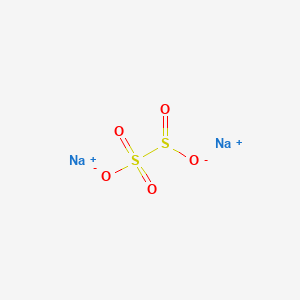
CAS 7681-57-4PubChem CID 656671
Sodium Pyrosulfite
Sodium disulfite is an inorganic sodium salt composed of sodium and disulfite ions in a 2:1 ratio. It has a role as a food antioxidant. It contains a disulfite. — ChEBI
- Summenformel
- Na2O5S2
- Molekulargewicht
- 190.11 g/mol
- Exakte Masse
- 189.89825401 Da
- Topologische polare Oberfläche
- 125,0 Ų
- Wasserstoffbrücken-Donoren
- 0
- Wasserstoffbrücken-Akzeptoren
- 6
- Kovalente Einheiten
- 3
- Definierte Stereozentren
- 0
Auch bekannt als
Sodium metabisulfiteSodium disulfiteDisodium pyrosulfiteNatrii disulfisCampden TabletsDisodium metabisulfiteNatrium pyrosulfitNatriummetabisulfit
16 weitere gemeldete Namen
sodium pyrosulphiteSodium bisulfite anhydrousNatrium metabisulfurosumSodium pyrosulfite (Na2S2O5)Disodium pentaoxodisulfate4VON5FNS3CINS NO.223Sodium metabisulfite (e 223)INS-223NSC-158277NSC-227243DISODIUM PYROSULPHITEE-223CHEBI:114786Na(2)S(2)O(5)RefChem:6239
Kennungen in externen Datenbanken
- ChEBI:CHEBI:114786
- ChEMBL:CHEMBL2016976
- EPA DTXSID:DTXSID0029684
- PubMed:40706911
- PubMed:35067933
- PubMed:33957602
- PubMed:33817499
- PubMed:29188487
- PubMed:26795242
- PubMed:26015265
- PubMed:25486021
- PubMed:25463229
- PubMed:14763933
Am 2026-09-02 von NIH PubChem durch prüfsummengültigen CAS-Abgleich abgerufen. Chemische Eigenschaften ersetzen nicht die regulatorische Entscheidung auf dieser Seite.
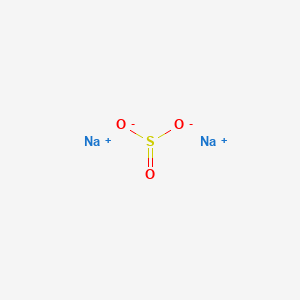
CAS 7757-83-7PubChem CID 24437
Sodium Sulfite
Sodium sulfite is an inorganic sodium salt having sulfite as the counterion. It has a role as a reducing agent and a food preservative. It is an inorganic sodium salt and a sulfite salt. It contains a sulfite. — ChEBI
- IUPAC-Name
- disodium;sulfite
- Summenformel
- Na2O3S
- Molekulargewicht
- 126.05 g/mol
- Exakte Masse
- 125.93635360 Da
- Topologische polare Oberfläche
- 82,4 Ų
- Wasserstoffbrücken-Donoren
- 0
- Wasserstoffbrücken-Akzeptoren
- 4
- Kovalente Einheiten
- 3
- Definierte Stereozentren
- 0
Auch bekannt als
Disodium sulfiteSodium sulfite anhydrousSodium sulphiteSulfurous acid, disodium saltNatrium sulfurosumSulftechNatriumsulfidNatriumsulfit
16 weitere gemeldete Namen
S-WATNatrii sulphisAnhydrous sodium sulfiteSodium sulfite (Na2SO3)Exsiccated sodium sulfiteNatrum sulphurosumSodium sulphite anhydrousSulfurous acid, sodium salt (1:2)Sodium sulfite, anhydrousSodium sulfite, exsiccatedDried sodium sulfiteDisodium sulfite (Na2SO3)Anhydrous sodium sulphiteSodium sulfite (2:1)VTK01UQK3GINS NO.221
Kennungen in externen Datenbanken
- ChEBI:CHEBI:86477
- ChEMBL:CHEMBL1945334
- EPA DTXSID:DTXSID2044260
- PubMed:23973939
- PubMed:21873648
- PubMed:20348042
Am 2026-09-02 von NIH PubChem durch prüfsummengültigen CAS-Abgleich abgerufen. Chemische Eigenschaften ersetzen nicht die regulatorische Entscheidung auf dieser Seite.
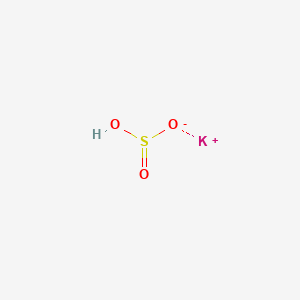
CAS 7773-03-7PubChem CID 23663620
Potassium Bisulfite
Potassium bisulfite solution is a colorless aqueous with a slight sulfur dioxide odor. Used as a reducing agent and chemical preservative. — CAMEO Chemicals
- IUPAC-Name
- potassium hydrogen sulfite
- Summenformel
- HKO3S
- Molekulargewicht
- 120.17 g/mol
- Exakte Masse
- 119.92834655 Da
- Topologische polare Oberfläche
- 79,6 Ų
- Wasserstoffbrücken-Donoren
- 1
- Wasserstoffbrücken-Akzeptoren
- 4
- Kovalente Einheiten
- 2
- Definierte Stereozentren
- 0
Auch bekannt als
Monopotassium sulfiteQJK5LO891PSulfurous acid, potassium salt (1:1)POTASSIUM BISULPHITEUNII-QJK5LO891PPotassium sulfite, hydrogenINS NO.228POTASSIUM BISULFITE [II]
16 weitere gemeldete Namen
HSDB 1263INS-228POTASSIUM BISULFITE [HSDB]Sulfurous acid, monopotassium saltPOTASSIUM BISULFITE [MART.]EINECS 231-870-1E-228POTASSIUM BISULFITE (II)POTASSIUM BISULFITE (MART.)RefChem:175431POTASSIUM BISULFITE SOLUTIONPOTASSIUM BISULPHITE SOLUTIONUN2693231-870-1potassium;hydrogen sulfitePotassium hydrogen sulphite
Kennungen in externen Datenbanken
- EPA DTXSID:DTXSID6064795
Am 2026-09-02 von NIH PubChem durch prüfsummengültigen CAS-Abgleich abgerufen. Chemische Eigenschaften ersetzen nicht die regulatorische Entscheidung auf dieser Seite.
Weitere maßgebliche Stoffrecherche
Jeder Link durchsucht die jeweilige Quelle nach dieser Identität. Ein Link ist ein Recherchepfad und keine Behauptung, dass die Quelle einen exakten Eintrag enthält. Was jede Quelle ist und welches rechtliche Gewicht sie hat
Diesen Eintrag weiterverwenden
Amtliche Quelle und Geltungsbereich
Importiert aus dem Durchführungsbeschluss (EU) 2025/1175 der Kommission (Datensatzversion EU 2025/1175). Das Glossar liefert gebräuchliche Inhaltsstoffnamen für die nach Artikel 19 Absatz 1 Buchstabe g vorgeschriebene Inhaltsstoffliste; es ist keine Zulassungs- oder Sicherheitsliste.
Amtlichen Beschluss öffnen