
Cobalt sulphate
Cobalt sulphate ist in Anhang II als verbotener Stoff für kosmetische Mittel aufgeführt, die in der EU in Verkehr gebracht werden.
Eintragsdetails
Chemische Bezeichnung
Cobalt sulphate
Regulatorische Informationen
Weitere Richtlinien
(EC) 2009/790
SCCS-Gutachten
- Opinion concerning Chemical Ingredients in Cosmetic Products classified as Carcinogenic, Mutagenic or Toxic to Reproduction according to the Chemicals Directive 67/548/EECC
- Opinion concerning Chemical Ingredients in Cosmetic Products classified as Carcinogenic, Mutagenic or Toxic to Reproduction according to the Chemicals Directive 67/548/EEC
CMR
| Kategorie | Carcinogenic | Mutagenic | Reprotoxic |
|---|---|---|---|
| Cat. 1B | ✓ C=>0.01% | — | — |
Kerndaten
Chemische Identität und Eigenschaften
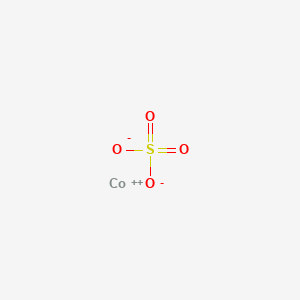
Cobalt Sulfate
Cobalt(2+) sulfate is a compound of cobalt and sulfate in which the ratio of cobalt (+2 oxidation state) to sulfate is 1:1. It contains a cobalt(2+). — ChEBI
- IUPAC-Name
- cobalt(2+) sulfate
- Summenformel
- CoO4S
- Molekulargewicht
- 155.00 g/mol
- Exakte Masse
- 154.884923 Da
- Topologische polare Oberfläche
- 88,6 Ų
- Wasserstoffbrücken-Donoren
- 0
- Wasserstoffbrücken-Akzeptoren
- 4
- Kovalente Einheiten
- 2
- Definierte Stereozentren
- 0
Auch bekannt als
16 weitere gemeldete Namen
Kennungen in externen Datenbanken
- ChEBI:CHEBI:53470
- EPA DTXSID:DTXSID1031042
Belege aus weiteren wissenschaftlichen Datenbanken
EMBL-EBI ChEBI
cobalt(2+) sulfate
A compound of cobalt and sulfate in which the ratio of cobalt (+2 oxidation state) to sulfate is 1:1.
- Rezeptur
- Co.O4S
- Durchschnittsmasse
- 154.996 g/mol
- Monoisotopische Masse
- 154.88492 Da
- Formale Ladung
- 0
- metal sulfate — is a (CHEBI:51336)
- cobalt(2+) — has part (CHEBI:48828)
- metal sulfate — is a (CHEBI:51336)
- 2415590 Quelle: PubMed
Weitere kuratierte Namen
Querverweise aus dieser Quelle
- CAS: 10026-24-1 — KEGG COMPOUND
- CAS: 10124-43-3 — KEGG COMPOUND
- CAS: 10124-43-3 — ChemIDplus
- CAS: 10124-43-3 — NIST Chemistry WebBook
- REGISTRY_NUMBER: 268815 — Gmelin
- REGISTRY_NUMBER: 270126 — Gmelin
- REGISTRY_NUMBER: 270959 — Gmelin
- REGISTRY_NUMBER: 8292 — Gmelin
- MANUAL_X_REF: C17383 — KEGG COMPOUND
- MANUAL_X_REF: C19215 — KEGG COMPOUND
Zugeordnet durch: Exact CAS cross-reference in the ChEBI compound record. Quelle aktualisiert: 2016-02-17. Abgerufen: 2026-08-31. Quelleneintrag öffnen
NIH PubChem PUG-View
Attributed physical-property, hazard, environmental and use annotations.
- Color/Form: Red to lavender dimorphic, othorhombic crystals Quelle: Hazardous Substances Data Bank (HSDB)
- Color/Form: Red orthorhombic crystals Quelle: Hazardous Substances Data Bank (HSDB)
- Color/Form: Red powder Quelle: Hazardous Substances Data Bank (HSDB)
- Color/Form: Rose-pink solid Quelle: Hazardous Substances Data Bank (HSDB)
- Density: 1.948 at 68 °F (USCG, 1999) - Denser than water; will sink Quelle: CAMEO Chemicals
- Density: 3.71 at 25 °C/4 °C Quelle: Hazardous Substances Data Bank (HSDB)
- Density: Light red crystalline solid; loses waters of crystallization when heated above 42 °C, producing the monohydrate at 100 °C and anhydrous salt above 250 °C; density: 2.01 kg/L at 25 °C /Cobalt(II) sulfate hexahydrate/ Quelle: Hazardous Substances Data Bank (HSDB)
- Density: Density: 1.948 g/cu cm; loses heptahydrate at 420 °C /Cobalt(II) sulfate heptahydrate/ Quelle: Hazardous Substances Data Bank (HSDB)
- Density: 3.71 g/cm³ Quelle: ILO-WHO International Chemical Safety Cards (ICSCs)
- Density: 3.71 @25 °C Quelle: PAC Chemical Database, U.S. Department of Energy
- Melting Point: 735 °C Quelle: Hazardous Substances Data Bank (HSDB)
- Melting Point: 735 °C Quelle: PAC Chemical Database, U.S. Department of Energy
- Odor: Odorless Quelle: Hazardous Substances Data Bank (HSDB)
- Physical Description: Cobalt sulfate is an odorless rose-pink solid. Sinks and mixes with water. (USCG, 1999) Quelle: CAMEO Chemicals
- Physical Description: Dry Powder; Large Crystals; Large Crystals; Liquid; Dry Powder; Large Crystals Quelle: EPA Chemical Data Reporting (CDR)
- Physical Description: Red to lavender solid; [Merck Index] Blue odorless powder; Soluble in water (362 g/L at 20 deg C); [MSDSonline] Quelle: Haz-Map, Information on Hazardous Chemicals and Occupational Diseases
- Physical Description: LAVENDER-TO-DARK-BLUE CRYSTALS. Quelle: ILO-WHO International Chemical Safety Cards (ICSCs)
- Solubility: Odorless; heat of solution: 23 BTU/lb= 13 cal/g= 0.54X10+5 J/kg; solubility: 35.040 lb/100 lb water at 70 °F /Cobaltous sulfate heptahydrate/ Quelle: Hazardous Substances Data Bank (HSDB)
- Solubility: In water, 330 g/L at 20 °C Quelle: Hazardous Substances Data Bank (HSDB)
- Solubility: 38.3 g/100 g water at 25 °C Quelle: Hazardous Substances Data Bank (HSDB)
- Solubility: Dissolves slowly in boiling water Quelle: Hazardous Substances Data Bank (HSDB)
- Solubility: 84 g/100 mL water at 100 °C Quelle: Hazardous Substances Data Bank (HSDB)
- Solubility: For more Solubility (Complete) data for Cobaltous sulfate (6 total), please visit the HSDB record page. Quelle: Hazardous Substances Data Bank (HSDB)
- Solubility: Solubility in water, g/100ml at 20 °C: 36.2 (good) Quelle: ILO-WHO International Chemical Safety Cards (ICSCs)
- pH: Acidic salts, such as cobalt sulfate ... resulting aqueous solutions contain moderate concentrations of hydrogen ions and have pH's of less than 7.0. They react as acids to neutralize bases. Quelle: Hazardous Substances Data Bank (HSDB)
- Carcinogen Classification: 2B, possibly carcinogenic to humans. (L135) Quelle: Toxin and Toxin Target Database (T3DB)
- Exposure Routes: The substance can be absorbed into the body by inhalation and by ingestion. Quelle: ILO-WHO International Chemical Safety Cards (ICSCs)
- Exposure Routes: Inhalation (L29) ; oral (L29) ; dermal (L29) Quelle: Toxin and Toxin Target Database (T3DB)
- First Aid: INHALATION: move to fresh air; if breathing has stopped, begin artificial respiration and call a doctor.; INGESTION: give large amount of water; induce vomiting; call a doctor.; EYES: flush with water for at least 15 min.; consult a physician if irritation persists.; SKIN: flush with water. (USCG, 1999) Quelle: CAMEO Chemicals
- Signal: Danger Quelle: Regulation (EC) No 1272/2008 of the European Parliament and of the Council
- GHS Hazard Statements: H302: Harmful if swallowed [Warning Acute toxicity, oral]; H317: May cause an allergic skin reaction [Warning Sensitization, Skin]; H334: May cause allergy or asthma symptoms or breathing difficulties if inhaled [Danger Sensitization, respiratory]; H341: Suspected of causing genetic defects [Warning Germ cell mutagenicity]; H350i: May cause cancer by inhalation [Danger Carcinogenicity]; H360F ***: May damage fertility [Danger Reproductive toxicity]; H400: Very toxic to aquatic life [Warning Hazardous to the aquatic environment, acute hazard]; H410: Very toxic to aquatic life with long lasting effects [Warning Hazardous to the aquatic environment, long-term hazard] Quelle: Regulation (EC) No 1272/2008 of the European Parliament and of the Council
- Precautionary Statement Codes: P203, P233, P260, P261, P264, P270, P271, P272, P273, P280, P284, P301+P317, P302+P352, P304+P340, P318, P321, P330, P333+P317, P342+P316, P362+P364, P391, P403, P405, and P501 (click each P-code to see the statement) Quelle: Regulation (EC) No 1272/2008 of the European Parliament and of the Council
- Signal: Danger Quelle: European Chemicals Agency (ECHA)
- GHS Hazard Statements: H302 (99.8%): Harmful if swallowed [Warning Acute toxicity, oral]; H317 (100%): May cause an allergic skin reaction [Warning Sensitization, Skin]; H319 (15.9%): Causes serious eye irritation [Warning Serious eye damage/eye irritation]; H334 (> 99.9%): May cause allergy or asthma symptoms or breathing difficulties if inhaled [Danger Sensitization, respiratory]; H341 (99.8%): Suspected of causing genetic defects [Warning Germ cell mutagenicity]; H350 (85.6%): May cause cancer [Danger Carcinogenicity]; H350i (14.4%): May cause cancer by inhalation [Danger Carcinogenicity]; H360 (84.1%): May damage fertility or the unborn child [Danger Reproductive toxicity]; H360F (10.5%): May damage fertility [Danger Reproductive toxicity]; H400 (99.9%): Very toxic to aquatic life [Warning Hazardous to the aquatic environment, acute hazard]; H410 (97.3%): Very toxic to aquatic life with long lasting effects [Warning Hazardous to the aquatic environment, long-term hazard] Quelle: European Chemicals Agency (ECHA)
- Precautionary Statement Codes: P203, P233, P260, P261, P264, P264+P265, P270, P271, P272, P273, P280, P284, P301+P317, P302+P352, P304+P340, P305+P351+P338, P318, P321, P330, P333+P317, P337+P317, P342+P316, P362+P364, P391, P403, P405, and P501 (click each P-code to see the statement) Quelle: European Chemicals Agency (ECHA)
- ECHA C&L Notifications Summary: Aggregated GHS information provided per 2654 reports by companies from 34 notifications to the ECHA C&L Inventory. Each notification may be associated with multiple companies.; Information may vary between notifications depending on impurities, additives, and other factors. The percentage value in parenthesis indicates the notified classification ratio from companies that provide hazard codes. Only hazard codes with percentage values above 10% are shown. For more detailed information, please visit ECHA C&L website. Quelle: European Chemicals Agency (ECHA)
- Signal: Danger Quelle: NITE-CMC
- GHS Hazard Statements: H350: May cause cancer [Danger Carcinogenicity] Quelle: NITE-CMC
- Precautionary Statement Codes: P203, P280, P318, P405, and P501 (click each P-code to see the statement) Quelle: NITE-CMC
- Signal: Warning Quelle: NITE-CMC
- GHS Hazard Statements: H341: Suspected of causing genetic defects [Warning Germ cell mutagenicity] Quelle: NITE-CMC
- Health Effects: Exposure to high amount of cobalt can cause heart, lung, kidney, and liver damage. Skin contact is known to result in contact dermatitis. Cobalt may also have mutagenic and carcinogenic effects. (L29, L30) Quelle: Toxin and Toxin Target Database (T3DB)
- Toxicity Summary: IDENTIFICATION: Cobalt sulfate is a red powder. It is used in storage batteries; in cobalt-electroplating baths; as drier for lithographic inks, and varnishes; in ceramics, enamels, and glazes to prevent discoloring; in cobalt pigments for decorating porcelain. HUMAN EXPOSURE AND TOXICITY: Cardiomyopathy has been observed in individuals who consume large quantities of beer where cobalt sulfate was added as a foam stabilizer. Repeated or prolonged contact may cause skin sensitization. Repeated or prolonged inhalation exposure may cause asthma. The substance may have effects on the heart, thyroid and bone marrow, resulting in cardiomyopathy, goiter and polycythemia. ANIMAL STUDIES: Rats and mice exposed short term to cobalt sulfate by inhalation exhibited necrosis and inflammation of the respiratory tract epithelium. Rats developed thymus necrosis and testicular atrophy. Rats exposed for 2-3 months to cobalt sulfate in the diet for 24 weeks had significant reductions in heart enzyme activity levels. Rats and mice were exposed to cobalt sulfate heptahydrate by inhalation 6 hr/day, 5 days/week for 13 weeks developed adverse effects throughout the respiratory system. At higher concentra Quelle: Hazardous Substances Data Bank (HSDB)
- Toxicity Summary: Cobalt is believed to exhibit its toxicity through a oxidant-based and free radical-based processes. It produces oxygen radicals and may be oxidized to ionic cobalt, causing increased lipid peroxidation, DNA damage, and inducing certain enzymes that lead to cell apoptosis. Cobalt has also been shown to block inorganic calcium channels, possibly impairing neurotransmission. Cobalt can also chelate lipoic acids, impairing oxidation of pyruvate or fatty acids. In addition, cobalt may inhibit DNA repair by interacting with zinc finger DNA repair proteins, and has also been shown to inhibit heme synthesis and glucose metabolism. Cobalt may activate specific helper T-lymphocyte cells and interact directly with immunologic proteins, such as antibodies (IgA and IgE) or Fc receptors, resulting in immunosensitization. (L29) Quelle: Toxin and Toxin Target Database (T3DB)
- Environmental Bioconcentration: Food Chain Concentration Potential of Cobaltous Sulfate (heptahydrate): Bioconcentration of 200-1000 fold only under constant exposure. Not significant in spill conditions(1). Quelle: Hazardous Substances Data Bank (HSDB)
- Environmental Fate: ATMOSPHERIC FATE: Inorganic cobalt compounds are nonvolatile and released into the atmosphere in particulate form(1). Particulate-phase cobalt compounds are removed from the air by wet and dry deposition(SRC). Cobalt has been detected in atmospheric deposition(2) and in rain-snow precipitation(3). Quelle: Hazardous Substances Data Bank (HSDB)
- Consumer Uses: Laboratory chemicals; Processing aids not otherwise specified Quelle: EPA Chemical Data Reporting (CDR)
- Industry Uses: Processing aids not otherwise specified; Plating agent; Intermediate; Pigment; Catalyst; Soil amendments (fertilizers) Quelle: EPA Chemical Data Reporting (CDR)
- Sources/Uses: Used as a pigment (ceramics, glazes, and enamels), catalyst, paint and ink drier, and soil additive; Also used in electroplating, storage batteries, and veterinary medicine (prevent and treat of cobalt-deficiency in ruminants; [HSDB] Quelle: Haz-Map, Information on Hazardous Chemicals and Occupational Diseases
- Industrial Processes with risk of exposure: Electroplating [Category: Plate]; Battery Manufacturing [Category: Industry]; Painting (Pigments, Binders, and Biocides) [Category: Paint] Quelle: Haz-Map, Information on Hazardous Chemicals and Occupational Diseases
- Activities with risk of exposure: Ceramics making [Category: Hobbies]; Enameling [Category: Hobbies] Quelle: Haz-Map, Information on Hazardous Chemicals and Occupational Diseases
- Uses: Usual source of water-soluble cobalt since it is the most economical and it shows less tendency to deliquesc or dehydrate than the chloride or nitrate. Used in storage batteries; in cobalt-electroplating baths; as drier for lithographic inks, varnishes; in ceramics, enamels, glazes to prevent discoloring; in cobalt pigments for decorating porcelain. Quelle: Hazardous Substances Data Bank (HSDB)
- Uses: Additive to soils, catalyst. Quelle: Hazardous Substances Data Bank (HSDB)
- Uses: ... used in feed supplements. Quelle: Hazardous Substances Data Bank (HSDB)
- Uses: Added to nickel plating baths to improve smoothness, brightness, hardness, and ductility of deposits. Quelle: Hazardous Substances Data Bank (HSDB)
- Uses: Cobalt(II) sulfate is used in pigments for glass and porcelain, as well as in storage batteries and electroplating baths, sympathetic inks, and as an additive to soils and animal feeds. (L36) Quelle: Toxin and Toxin Target Database (T3DB)
Zugeordnet durch: Existing checksum-valid CAS to unique PubChem CID match. Abgerufen: 2026-08-31. Quelleneintrag öffnen
Wissenschaftliche Klassifizierungen und Gefahrenannotationen liefern Kontext und ersetzen nicht die oben gezeigte marktspezifische regulatorische Entscheidung.
Weitere Quellenabdeckung und Trefferstatus
| Quelle | Ergebnis | Geprüft |
|---|---|---|
| EMBL-EBI ChEBI | Exakter Treffer | 2026-08-31 |
| NIH PubChem PUG-View | Exakter Treffer | 2026-08-31 |
Ein erfasster Nicht-Treffer ist ein nützlicher Beleg dafür, dass die Quelle geprüft wurde; er ist keine Behauptung, dass der Stoff anderswo nicht existiert.
Am 2026-09-02 von NIH PubChem durch prüfsummengültigen CAS-Abgleich abgerufen. Chemische Eigenschaften ersetzen nicht die regulatorische Entscheidung auf dieser Seite.
Verwandte Einträge zu Cobalt sulphate
Für diesen Eintrag gibt es nur wenige direkte Treffer; daher werden auch nahe liegende Einträge aus Anhang II angezeigt.
Nickel monoxide [1]; nickel oxide [2]; bunsenite [3]
6-(2-Chloroethyl)-6-(2-methoxyethoxy)-2,5,7,10-tetraoxa-6-silaundecane
Verbena essential oils (Lippia citriodora Kunth.) and derivatives other than absolute when used as …
3,6,10-Trimethyl-3,5,9-undecatrien-2-one (Pseudo-Isomethyl ionone), when used as a fragrance ingred…
Trinickel disulfide; nickel subsulfied [1]; heazlewoodite [2]
2-Pentylidenecyclohexanone, when used as a fragrance ingredient
Tetracarbonylnickel
5-Methyl-2,3-hexanedione (Acetyl isovaleryl), when used as a fragrance ingredient
Nickel (II) sulfide [1]; nickel sulfide [2]; millerite[3]
Was Anhang II für Cobalt sulphate bedeutet
Cobalt sulphate ist in Anhang II der EU-Kosmetikverordnung (EG) Nr. 1223/2009 als verbotener Stoff aufgeführt und darf nicht absichtlich zugesetzt werden. Artikel 17 regelt gesondert unbeabsichtigte geringe Mengen, die bei guter Herstellungspraxis technisch unvermeidbar und mit der Sicherheitsanforderung nach Artikel 3 vereinbar sind.
Rezepturentwickler müssen ihre Inhaltsstoffe und Rohstoffe prüfen, um sicherzustellen, dass keiner davon diesen Stoff enthält. Lieferanten sollten auf Anfrage eine Dokumentation vorlegen, die die Abwesenheit bestätigt.
Die Seite zeigt außerdem 12 verwandte Anhangseinträge mit überschneidenden Kennungen, Anhangslogik oder Namensmustern.
Compliance-Checkliste
- Prüfen Sie, dass dieser Stoff in allen Rohstoffen und fertigen Rezepturen nicht enthalten ist.
- Fordern Sie von Rohstofflieferanten eine Abwesenheitsbestätigung oder ein Analysenzertifikat an.
- Dokumentieren Sie das Prüfergebnis in der Produktinformationsdatei (PIF).
- Dieser Stoff hat eine CMR-Einstufung. Prüfen Sie die CMR-Tabelle oben und den aktuellen Status nach Anhang II/III, bevor Sie ihn verwenden.
Häufig gestellte Fragen
Quellenhinweis zu Anhang II, Eintrag Cobalt sulphate
Diese Seite fasst einen Eintrag aus Anhang II für Cobalt sulphate aus öffentlichen Materialien der Europäischen Kommission zu kosmetischen Mitteln zusammen und ergänzt, soweit verfügbar, verknüpfte Treffer aus dem Verzeichnis oder bei Kennungen.
Nutzen Sie diese Eintragsseite, um die Bedingungen aus Anhang II für Cobalt sulphate zu prüfen; bestätigen Sie jede endgültige regulatorische Entscheidung jedoch anhand des aktuellen amtlichen Anhangswortlauts und der Quelldateien.
Werkzeuge und nächste Schritte
Rezeptur prüfen
Fügen Sie eine vollständige INCI-Liste ein, um Cobalt sulphate und andere markierte EU-Anhangseinträge in einem Durchgang zu finden.
INCI-CheckerEinträge vergleichen
Cobalt sulphate nebeneinander mit einem anderen Anhangseintrag vergleichen, um Unterschiede bei Beschränkungen, Konzentrationen und Anhangszuordnung zu prüfen.
VergleichenDen Anhang durchsuchen
Alle Einträge in Anhang II ansehen und die regulatorischen Bedingungen der Stoffe in diesem Anhang vergleichen.
Anhang II öffnen