
Cobalt dinitrate
Listed by the Saudi Food and Drug Authority as prohibited in cosmetic products.
Regulatorische Entscheidung und vollständige Bedingungen
- Status
- Prohibited
- Rechtsrolle
- Binding rule
- Regulatorische Zusammenfassung
- Listed by the Saudi Food and Drug Authority as prohibited in cosmetic products.
- Bedingungen und Beschränkungen
- A prohibition entry may contain no separate condition text because the regulatory outcome is the prohibition itself. Öffnen Sie die zitierte Quelle und wenden Sie die unten genannten marktweiten Anforderungen an.
Stoffidentität
- Name in der amtlichen Quelle
- Cobalt dinitrate
- CAS
- 10141-05-6
- EC
- Not supplied in this source row
- Identitätszuordnung
- standalone:official_sfda_record
Marktübergreifende Übersicht zu dieser Identität
Exakte verknüpfte Einträge, die derzeit auf dieser Website vorhanden sind. Ein fehlender Markt bedeutet, dass kein exakter Treffer importiert wurde, nicht dass der Stoff verwendet werden darf.
European Union
1 verknüpfter Eintrag
Unterstützenden Eintrag öffnenGreat Britain
1 verknüpfter Eintrag
Unterstützenden Eintrag öffnenNew Zealand
1 verknüpfter Eintrag
Unterstützenden Eintrag öffnenASEAN
1 verknüpfter Eintrag
Unterstützenden Eintrag öffnenIndia
1 verknüpfter Eintrag · 1 mit besonderen Bedingungen
Unterstützenden Eintrag öffnenSaudi Arabia
Aktueller Eintrag1 verknüpfter Eintrag
Unterstützenden Eintrag öffnen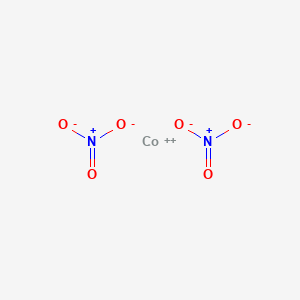
Verifizierte Chemie für CAS 10141-05-6
Cobalt dinitrate
Cobalt dinitrate is a cobalt salt in which the cobalt metal is in the +2 oxidation state and the counter-anion is nitrate. It is a cobalt salt and an inorganic nitrate salt. It contains a cobalt(2+). — ChEBI
- IUPAC-Name
- cobalt(2+) dinitrate
- Summenformel
- CoN2O6
- Molekulargewicht
- 182.94 g/mol
- Exakte Masse
- 182.908829 Da
- Monoisotopische Masse
- 182.908829 Da
- Topologische polare Oberfläche
- 126,0 Ų
- Molekulare Komplexität
- 18,0
- Formale Ladung
- 0
- Wasserstoffbrücken-Donoren
- 0
- Wasserstoffbrücken-Akzeptoren
- 6
- Drehbare Bindungen
- 0
- Schweratome
- 9
- Kovalente Einheiten
- 3
An PubChem gemeldete Namen und Synonyme
16 weitere gemeldete Namen
Kennungen in externen Datenbanken
- ChEBI:CHEBI:86209
- EPA DTXSID:DTXSID9064970
Erweiterte Strukturstatistik
- Definierte Atom-Stereozentren
- 0
- Nicht definierte Atom-Stereozentren
- 0
- Definierte Bindungs-Stereozentren
- 0
- Nicht definierte Bindungs-Stereozentren
- 0
- 3D-Konformere
- 0
Maschinenlesbare Strukturkennungen
- SMILES
[N+](=O)([O-])[O-].[N+](=O)([O-])[O-].[Co+2]- InChI
InChI=1S/Co.2NO3/c;2*2-1(3)4/q+2;2*-1- InChIKey
UFMZWBIQTDUYBN-UHFFFAOYSA-N
Belege aus weiteren wissenschaftlichen Datenbanken
EMBL-EBI ChEBI
cobalt dinitrate
A cobalt salt in which the cobalt metal is in the +2 oxidation state and the counter-anion is nitrate.
- Rezeptur
- Co.2NO3
- Durchschnittsmasse
- 182.941 g/mol
- Monoisotopische Masse
- 182.90883 Da
- Formale Ladung
- 0
- inorganic nitrate salt — is a (CHEBI:51084)
- cobalt salt — is a (CHEBI:35698)
- cobalt(2+) — has part (CHEBI:48828)
- inorganic nitrate salt — is a (CHEBI:51084)
- cobalt salt — is a (CHEBI:35698)
Weitere kuratierte Namen
Querverweise aus dieser Quelle
- CAS: 10141-05-6 — ChemIDplus
- CAS: 10141-05-6 — NIST Chemistry WebBook
- REGISTRY_NUMBER: 5990847 — Reaxys
- MANUAL_X_REF: Cobalt(II)_nitrate — Wikipedia
Zugeordnet durch: Exact CAS cross-reference in the ChEBI compound record. Quelle aktualisiert: 2015-06-29. Abgerufen: 2026-08-31. Quelleneintrag öffnen
NIH PubChem PUG-View
Attributed physical-property, hazard, environmental and use annotations.
- Color/Form: Pale red powder Quelle: Hazardous Substances Data Bank (HSDB)
- Color/Form: Red crystals Quelle: Hazardous Substances Data Bank (HSDB)
- Density: 1.54 at 68 °F (USCG, 1999) - Denser than water; will sink Quelle: CAMEO Chemicals
- Density: 2.49 g/cu cm Quelle: Hazardous Substances Data Bank (HSDB)
- Density: 2.49 g/cm³ Quelle: ILO-WHO International Chemical Safety Cards (ICSCs)
- Density: 2.49 @25 °C Quelle: PAC Chemical Database, U.S. Department of Energy
- Melting Point: 131 °F (USCG, 1999) Quelle: CAMEO Chemicals
- Melting Point: Decomposes at 100-105 °C Quelle: Hazardous Substances Data Bank (HSDB)
- Melting Point: MP: 55-56 °C (loses three H2O at 55 °C); liquid becomes green and decomposes to the oxide above 74 °C; soluble in water 1338 g/L at 0 °C, 2170 g/L at 80 °C); soluble in acetone and most organic solvents; slightly soluble in ammonium hydroxide /Cobaltous nitrate hexahydrate/ Quelle: Hazardous Substances Data Bank (HSDB)
- Odor: Odorless Quelle: Hazardous Substances Data Bank (HSDB)
- Physical Description: Cobalt nitrate is an odorless red solid. Sinks and mixes with water. (USCG, 1999) Quelle: CAMEO Chemicals
- Physical Description: Dry Powder; Liquid; Liquid; Other Solid Quelle: EPA Chemical Data Reporting (CDR)
- Physical Description: Pale red solid; [Merck Index] Red crystals, soluble in water; [MSDSonline] Quelle: Haz-Map, Information on Hazardous Chemicals and Occupational Diseases
- Physical Description: PALE RED POWDER. Quelle: ILO-WHO International Chemical Safety Cards (ICSCs)
- Solubility: Solubility: 97.929 lb/100 lb water at 70 °F /Cobaltous nitrate hexahydrate/ Quelle: Hazardous Substances Data Bank (HSDB)
- Solubility: Water solubility: >669.6 g/L at 20 °C /Cobaltous nitrate hexahydrate/ Quelle: Hazardous Substances Data Bank (HSDB)
- Solubility: Soluble in water Quelle: Hazardous Substances Data Bank (HSDB)
- Solubility: Solubility in water: soluble Quelle: ILO-WHO International Chemical Safety Cards (ICSCs)
- pH: pH 4.0 at 100 g/L at 20 °C Quelle: Hazardous Substances Data Bank (HSDB)
- Carcinogen Classification: Ingested nitrate or nitrite under conditions that result in endogenous nitrosation is probably carcinogenic to humans (Group 2A). Soluble cobalt(II) salts are possibly carcinogenic to humans (Group 2B). Quelle: Toxin and Toxin Target Database (T3DB)
- Exposure Routes: The substance can be absorbed into the body by inhalation of its aerosol and by ingestion. Quelle: ILO-WHO International Chemical Safety Cards (ICSCs)
- Exposure Routes: Inhalation (L29) ; oral (L29) ; dermal (L29) Quelle: Toxin and Toxin Target Database (T3DB)
- First Aid: INHALATION: move to fresh air; if breathing has stopped, begin artificial respiration and call a doctor.; INGESTION: give large amount of water; induce vomiting; call a doctor.; EYES: flush with water for at least 15 min.; SKIN: flush with water. (USCG, 1999) Quelle: CAMEO Chemicals
- Signal: Danger Quelle: Regulation (EC) No 1272/2008 of the European Parliament and of the Council
- GHS Hazard Statements: H317: May cause an allergic skin reaction [Warning Sensitization, Skin]; H334: May cause allergy or asthma symptoms or breathing difficulties if inhaled [Danger Sensitization, respiratory]; H341: Suspected of causing genetic defects [Warning Germ cell mutagenicity]; H350i: May cause cancer by inhalation [Danger Carcinogenicity]; H360F ***: May damage fertility [Danger Reproductive toxicity]; H400: Very toxic to aquatic life [Warning Hazardous to the aquatic environment, acute hazard]; H410: Very toxic to aquatic life with long lasting effects [Warning Hazardous to the aquatic environment, long-term hazard] Quelle: Regulation (EC) No 1272/2008 of the European Parliament and of the Council
- Precautionary Statement Codes: P203, P233, P260, P261, P271, P272, P273, P280, P284, P302+P352, P304+P340, P318, P321, P333+P317, P342+P316, P362+P364, P391, P403, P405, and P501 (click each P-code to see the statement) Quelle: Regulation (EC) No 1272/2008 of the European Parliament and of the Council
- Signal: Danger Quelle: European Chemicals Agency (ECHA)
- GHS Hazard Statements: H272 (54%): May intensify fire; oxidizer [Danger Oxidizing liquids; Oxidizing solids]; H302 (60.4%): Harmful if swallowed [Warning Acute toxicity, oral]; H317 (100%): May cause an allergic skin reaction [Warning Sensitization, Skin]; H318 (53.3%): Causes serious eye damage [Danger Serious eye damage/eye irritation]; H334 (100%): May cause allergy or asthma symptoms or breathing difficulties if inhaled [Danger Sensitization, respiratory]; H341 (100%): Suspected of causing genetic defects [Warning Germ cell mutagenicity]; H350 (49.1%): May cause cancer [Danger Carcinogenicity]; H350i (50.9%): May cause cancer by inhalation [Danger Carcinogenicity]; H360 (53%): May damage fertility or the unborn child [Danger Reproductive toxicity]; H360Fd (41.5%): May damage fertility; Suspected of damaging the unborn child [Danger Reproductive toxicity]; H400 (100%): Very toxic to aquatic life [Warning Hazardous to the aquatic environment, acute hazard]; H410 (88.4%): Very toxic to aquatic life with long lasting effects [Warning Hazardous to the aquatic environment, long-term hazard]; H411 (11.6%): Toxic to aquatic life with long lasting effects [Hazardous to the aquatic environment, long-term hazar Quelle: European Chemicals Agency (ECHA)
- Precautionary Statement Codes: P203, P210, P220, P233, P260, P261, P264, P264+P265, P270, P271, P272, P273, P280, P284, P301+P317, P302+P352, P304+P340, P305+P354+P338, P317, P318, P321, P330, P333+P317, P342+P316, P362+P364, P370+P378, P391, P403, P405, and P501 (click each P-code to see the statement) Quelle: European Chemicals Agency (ECHA)
- ECHA C&L Notifications Summary: Aggregated GHS information provided per 568 reports by companies from 24 notifications to the ECHA C&L Inventory. Each notification may be associated with multiple companies.; Information may vary between notifications depending on impurities, additives, and other factors. The percentage value in parenthesis indicates the notified classification ratio from companies that provide hazard codes. Only hazard codes with percentage values above 10% are shown. For more detailed information, please visit ECHA C&L website. Quelle: European Chemicals Agency (ECHA)
- Signal: Danger Quelle: NITE-CMC
- GHS Hazard Statements: H350: May cause cancer [Danger Carcinogenicity] Quelle: NITE-CMC
- Precautionary Statement Codes: P203, P280, P318, P405, and P501 (click each P-code to see the statement) Quelle: NITE-CMC
- GHS Hazard Statements: H302: Harmful if swallowed [Warning Acute toxicity, oral]; H317: May cause an allergic skin reaction [Warning Sensitization, Skin]; H318: Causes serious eye damage [Danger Serious eye damage/eye irritation]; H334: May cause allergy or asthma symptoms or breathing difficulties if inhaled [Danger Sensitization, respiratory]; H335: May cause respiratory irritation [Warning Specific target organ toxicity, single exposure; Respiratory tract irritation]; H351: Suspected of causing cancer [Warning Carcinogenicity]; H360: May damage fertility or the unborn child [Danger Reproductive toxicity]; H371: May cause damage to organs [Warning Specific target organ toxicity, single exposure]; H372: Causes damage to organs through prolonged or repeated exposure [Danger Specific target organ toxicity, repeated exposure]; H373: May causes damage to organs through prolonged or repeated exposure [Warning Specific target organ toxicity, repeated exposure] Quelle: NITE-CMC
- Precautionary Statement Codes: P203, P233, P260, P261, P264, P264+P265, P270, P271, P272, P280, P284, P301+P317, P302+P352, P304+P340, P305+P354+P338, P308+P316, P317, P318, P319, P321, P330, P333+P317, P342+P316, P362+P364, P403, P403+P233, P405, and P501 (click each P-code to see the statement) Quelle: NITE-CMC
- Health Effects: Exposure to high amount of cobalt can cause heart, lung, kidney, and liver damage. Skin contact is known to result in contact dermatitus. Cobalt may also have mutagenic and carcinogenic effects. Nitrate and nitrite poisoning causes methemoglobinemia. Nitrites may cause pregnancy complications and developmental effects. They may also be carcinogenic. (L1137, L29, L30) Quelle: Toxin and Toxin Target Database (T3DB)
- Toxicity Summary: IDENTIFICATION AND USE: Cobalt nitrate forms red crystals, or pale red powder. It is used in manufacture of cobalt pigments and invisible inks; decorating stoneware and porcelain; preparation of catalysts; production of vitamin B12 supplements. Cobalt nitrate is an important source of high-purity cobalt for use in the electronics and related industries. HUMAN EXPOSURE AND TOXICITY: Repeated or prolonged contact may cause skin sensitization. Repeated or prolonged inhalation may cause asthma. Ingestion may cause effects on the bone marrow, heart and thyroid. ANIMAL STUDIES: After four daily injections of 0.03 g cobalt nitrate, the pancreas of guinea pigs showed an increase in number of endocrine islands. The majority of alpha cells were degranulated with nuclei surrounded by a colorless cytoplasm. When animals were allowed to recover after the last injection, islands returned to normal. Cobalt nitrate given to rats sc twice over 24 hr period increased erythropoietic activity of the serum by greater than 3-fold, decreased renal blood flow by 18%, and disrupted metabolism in kidney. Rats exposed to 6.44 mg cobalt/kg/day as cobalt nitrate in the drinking water showed an increased sensit Quelle: Hazardous Substances Data Bank (HSDB)
- Toxicity Summary: Cobalt is believed to exhibit its toxicity through a oxidant-based and free radical-based processes. It produces oxygen radicals and may be oxidized to ionic cobalt, causing increased lipid peroxidation, DNA damage, and inducing certain enzymes that lead to cell apoptosis. Cobalt has also been shown to block inorganic calcium channels, possibly impairing neurotransmission. Cobalt can also chelate lipoic acids, impairing oxidation of pyruvate or fatty acids. In addition, cobalt may inhibit DNA repair by interacting with zinc finger DNA repair proteins, and has also been shown to inhibit heme synthesis and glucose metabolism. Cobalt may activate specific helper T-lymphocyte cells and interact directly with immunologic proteins, such as antibodies (IgA and IgE) or Fc receptors, resulting in immunosensitization. (L29) Nitrate's toxicity is a result of it's conversion to nitrite once in the body. Nitrite causes the autocatalytic oxidation of oxyhemoglobin to hydrogen peroxide and methemoglobin. This elevation of methemoglobin levels is a condition known as methemoglobinemia, and is characterized by tissue hypoxia, as methemoglobin cannot bind oxygen. (A2450, L1613) Quelle: Toxin and Toxin Target Database (T3DB)
- Environmental Bioconcentration: Food Chain Concentration Potential of Cobalt Nitrate Hexahydrate: Bioconcentration of 200-1000 fold only under constant exposure. Not significant in spill conditions(1). Quelle: Hazardous Substances Data Bank (HSDB)
- Environmental Fate: ATMOSPHERIC FATE: Inorganic cobalt compounds are nonvolatile and released into the atmosphere in particulate form(1). Particulate-phase cobalt compounds are removed from the air by wet and dry deposition(SRC). Cobalt has been detected in atmospheric deposition(2) and in rain-snow precipitation(3). Quelle: Hazardous Substances Data Bank (HSDB)
- Consumer Uses: Catalyst Quelle: EPA Chemical Data Reporting (CDR)
- Industry Uses: Etching agent; Chelating agent; Intermediate; Catalyst; Plating agent Quelle: EPA Chemical Data Reporting (CDR)
- Sources/Uses: Used in pigments, invisible inks, ceramics, catalysts; supplements, fertilizers, animal feeds, and hair dyes; [HSDB] Quelle: Haz-Map, Information on Hazardous Chemicals and Occupational Diseases
- Industrial Processes with risk of exposure: Farming (Feed Additives) [Category: Industry] Quelle: Haz-Map, Information on Hazardous Chemicals and Occupational Diseases
- Activities with risk of exposure: Ceramics making [Category: Hobbies] Quelle: Haz-Map, Information on Hazardous Chemicals and Occupational Diseases
- Uses: Manufacture of cobalt pigments and invisible inks; decorating stoneware and porcelain; preparation of catalysts; production of vitamin B12 supplements. Quelle: Hazardous Substances Data Bank (HSDB)
- Uses: Additive to soils and animal feeds, vitamin preparations, hair dyes. Quelle: Hazardous Substances Data Bank (HSDB)
- Uses: Cobalt nitrate is an important source of high-purity cobalt for use in the electronics and related industries. Quelle: Hazardous Substances Data Bank (HSDB)
- Uses: The high solubility of cobalt nitrate makes it a common source of cobalt in metal-organic frameworks and polymers. It is also reduced to metallic cobalt or precipitated on various substrates for Fischer-Tropsch catalysis. (L492) Quelle: Toxin and Toxin Target Database (T3DB)
Zugeordnet durch: Existing checksum-valid CAS to unique PubChem CID match. Abgerufen: 2026-08-31. Quelleneintrag öffnen
Wissenschaftliche Klassifizierungen und Gefahrenannotationen liefern Kontext und ersetzen nicht die oben gezeigte marktspezifische regulatorische Entscheidung.
Weitere Quellenabdeckung und Trefferstatus
| Quelle | Ergebnis | Geprüft |
|---|---|---|
| EMBL-EBI ChEBI | Exakter Treffer | 2026-08-31 |
| NIH PubChem PUG-View | Exakter Treffer | 2026-08-31 |
Ein erfasster Nicht-Treffer ist ein nützlicher Beleg dafür, dass die Quelle geprüft wurde; er ist keine Behauptung, dass der Stoff anderswo nicht existiert.
Am 2026-09-02 von NIH PubChem durch prüfsummengültigen CAS-Abgleich abgerufen. Chemische Eigenschaften ersetzen nicht die regulatorische Entscheidung auf dieser Seite.
Amtliche Quelle und Herkunft
- Registrierte Quelle
- Saudi SFDA prohibited and restricted ingredient lists
- Quellenverweis
- SFDA prohibited list, page 142, row 3
- Eintrags-ID der Quelle
prohibited-141-3- Quellenversion
- live-snapshot-2026-08-30
- Quellsprache
- English
- Übersetzungsstatus
- Original is English
- Stand geprüft
- 2026-08-30 05:18 UTC
- Validierungsmethode
- complete SFDA paginated HTML snapshot; strict page/row counts
- SHA-256
ceb6cc636e6b1f4b3013f88ce0297217b49d6194342c6ece5c03b1e04256d71a
Hinweise zum registrierten Datensatz
- Datensatzabdeckung
- Prohibited and restricted substances with CAS, EC and conditions
- Hinweis zur Behörde
- Official SFDA dated lists; version and hash each release
Wie dieser Eintrag in den Marktdatensatz passt
Statusverteilung
Bedingungstext ist bei 0 von 2090 aktuellen Einträgen vorhanden. Ein leeres Bedingungsfeld wird entsprechend der oben genannten Eintragsart interpretiert; es wird niemals in die Aussage einer uneingeschränkten Verwendung umgedeutet.
Saudi Arabia Marktkontext
Complete official list index
Abdeckungsversion: SFDA live prohibited/restricted lists, snapshot 30 August 2026
Every page and entry in the public SFDA prohibited and restricted ingredient indexes; restricted detail pages remain the source for conditions.
Verifizierungs-Checkliste
- Search names and CAS across both SFDA lists.
- Open the cited restricted-entry detail and apply every condition.
- Check current SFDA/GSO technical regulations and updates.
- Complete eCosma notification, label and responsible-party requirements.
Amtliche Marktquellen
- Saudi SFDA prohibited and restricted ingredient listsOfficial SFDA dated lists; version and hash each release
Verifizierungsablauf und Vollständigkeit des Eintrags
Bevor Sie dieses Ergebnis für eine Compliance-Entscheidung verwenden
- Bestätigen Sie, dass „Cobalt dinitrate“ und jede CAS-/EC-Kennung sich auf das Material in Ihrer Lieferantenspezifikation beziehen.
- Search names and CAS across both SFDA lists.
- Open the cited restricted-entry detail and apply every condition.
- Check current SFDA/GSO technical regulations and updates.
- Complete eCosma notification, label and responsible-party requirements.
- Dokumentieren Sie die Quellenversion und prüfen Sie die Behörde vor Herstellung, Notifizierung oder Inverkehrbringen erneut.
In diesem Eintrag verfügbare Felder
- Amtlicher StoffnameVerfügbar
- CASVerfügbar
- ECNicht angegeben
- Gesonderter BedingungstextIn der Quellzeile nicht vorhanden
- Datum des InkrafttretensNicht angegeben
- Snapshot-Hash und MethodeVerfügbar
Fragen, die diese Seite beantwortet
Dauerhafte Zitierweise
Cobalt dinitrate. SFDA prohibited list, page 142, row 3. Saudi Arabia. Source version live-snapshot-2026-08-30. CosIng Checker regulatory record: https://cosingchecker.com/de/regulations/sa/records/10992/
Zitieren Sie die Aufsichtsbehörde als rechtliche Autorität. Diese Seite ist ein strukturierter Belegindex und eine Verifizierungshilfe, kein Ersatz für den amtlichen Text oder eine fachkundige rechtliche Bewertung.
Auslegung und Grenzen für Saudi Arabia
This official record identifies the substance as prohibited for cosmetic use in the stated market scope.
Do not rely on a formulation containing this identity until the cited source, effective date and exact substance match have been verified.
Wie die Rechtsrolle auszulegen ist
The cited row forms part of a binding rule or legally incorporated list for this market.
Belege auf dieser Seite
- Erfasstes Ergebnis: Prohibited
- Rechtsrolle: Binding rule
- Quellenversion: live-snapshot-2026-08-30
Was es nicht beweist
No list match is not permission; Gulf/SFDA product, claim, notification and technical requirements still apply.
Weitere maßgebliche Stoffrecherche
Keine dieser Quellen hebt die oben genannte Marktentscheidung auf.
Cosmetic Ingredient Review safety assessments
Expert Panel conclusions, assessed ingredient groups, use conditions, dates and report documents
Independent expert review considered by FDA; not a government approval or binding market rule
Diese Identität bei der Quelle recherchierenFDA Global Substance Registration System
UNII identifiers, preferred names, substance types, codes and public substance relationships
Identity registry only; UNII availability does not imply FDA review or approval
Diese Identität bei der Quelle recherchierenILO/WHO International Chemical Safety Cards
Hazards, symptoms, first aid, storage, incompatibilities and physical properties for covered chemicals
International occupational chemical-safety reference; not cosmetic-use approval
Diese Identität bei der Quelle recherchierenJapan NITE-CHRIP
Chemical identity, Japanese and foreign legal lists, GHS hazards and exposure-related information
Chemical-management evidence; cosmetic status remains governed by the applicable MHLW standard and market rules
Diese Identität bei der Quelle recherchierenNIOSH Pocket Guide to Chemical Hazards
REL, PEL, IDLH, properties, exposure routes, symptoms, target organs, first aid and measurement methods for covered workplace chemicals
US occupational-health guidance and limits; not a cosmetic ingredient decision
Diese Identität bei der Quelle recherchierenOECD eChemPortal
Gateway to authority-owned physical-property, fate, ecotoxicity, toxicity, exposure and GHS records
Discovery gateway; each linked authority remains responsible for its data
Diese Identität bei der Quelle recherchierenUS EPA CompTox CTX APIs
Für den Import ist ein API-Schlüssel erforderlichDTXSID identity, experimental and predicted properties, toxicity, bioactivity, exposure and environmental data
Scientific and computational evidence; predictions must remain labelled and do not determine cosmetic legality
Diese Identität bei der Quelle recherchieren