
Methylmercuric chloride
ASEAN Annex II lists this record among substances prohibited in cosmetic products. Member-state transition rules and deviations still require local verification.
Regulatorische Entscheidung und vollständige Bedingungen
- Status
- Prohibited
- Rechtsrolle
- Binding rule
- Regulatorische Zusammenfassung
- ASEAN Annex II lists this record among substances prohibited in cosmetic products. Member-state transition rules and deviations still require local verification.
- Bedingungen und Beschränkungen
- A prohibition entry may contain no separate condition text because the regulatory outcome is the prohibition itself. Öffnen Sie die zitierte Quelle und wenden Sie die unten genannten marktweiten Anforderungen an.
Stoffidentität
- Name in der amtlichen Quelle
- Methylmercuric chloride
- CAS
- 115-09-3
- EC
- Not supplied in this source row
- Identitätszuordnung
- standalone:official_asean_record
Marktübergreifende Übersicht zu dieser Identität
Exakte verknüpfte Einträge, die derzeit auf dieser Website vorhanden sind. Ein fehlender Markt bedeutet, dass kein exakter Treffer importiert wurde, nicht dass der Stoff verwendet werden darf.
European Union
1 verknüpfter Eintrag
Unterstützenden Eintrag öffnenGreat Britain
1 verknüpfter Eintrag
Unterstützenden Eintrag öffnenNew Zealand
1 verknüpfter Eintrag
Unterstützenden Eintrag öffnenASEAN
Aktueller Eintrag1 verknüpfter Eintrag
Unterstützenden Eintrag öffnenSaudi Arabia
1 verknüpfter Eintrag
Unterstützenden Eintrag öffnen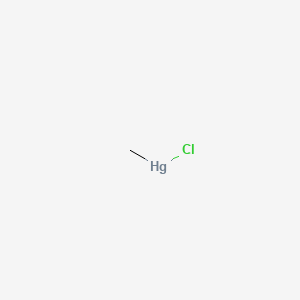
Verifizierte Chemie für CAS 115-09-3
Methylmercury chloride
Methyl mercury(ii)chloride appears as white microcrystals or crystals. (NTP, 1992) — CAMEO Chemicals
- IUPAC-Name
- chloro(methyl)mercury
- Summenformel
- CH3ClHg
- Molekulargewicht
- 251.08 g/mol
- Exakte Masse
- 251.962971 Da
- Monoisotopische Masse
- 251.962971 Da
- Topologische polare Oberfläche
- 0,0 Ų
- Molekulare Komplexität
- 4,0
- Formale Ladung
- 0
- Wasserstoffbrücken-Donoren
- 0
- Wasserstoffbrücken-Akzeptoren
- 0
- Drehbare Bindungen
- 0
- Schweratome
- 3
- Kovalente Einheiten
- 1
An PubChem gemeldete Namen und Synonyme
16 weitere gemeldete Namen
Kennungen in externen Datenbanken
Erweiterte Strukturstatistik
- Definierte Atom-Stereozentren
- 0
- Nicht definierte Atom-Stereozentren
- 0
- Definierte Bindungs-Stereozentren
- 0
- Nicht definierte Bindungs-Stereozentren
- 0
- 3D-Konformere
- 0
Maschinenlesbare Strukturkennungen
- SMILES
C[Hg]Cl- InChI
InChI=1S/CH3.ClH.Hg/h1H3;1H;/q;;+1/p-1- InChIKey
BABMCXWQNSQAOC-UHFFFAOYSA-M
Belege aus weiteren wissenschaftlichen Datenbanken
NIH PubChem PUG-View
Attributed physical-property, hazard, environmental and use annotations.
- Color/Form: White crystals ... or plates from ethanol Quelle: Hazardous Substances Data Bank (HSDB)
- Density: 4.06 at 77 °F (NTP, 1992) - Denser than water; will sink Quelle: CAMEO Chemicals
- Density: 4.063 Quelle: Hazardous Substances Data Bank (HSDB)
- LogP: log Kow = 0.41 Quelle: Hazardous Substances Data Bank (HSDB)
- Melting Point: 338 °F (NTP, 1992) Quelle: CAMEO Chemicals
- Melting Point: 170 °C Quelle: Hazardous Substances Data Bank (HSDB)
- Odor: Characteristic Quelle: Hazardous Substances Data Bank (HSDB)
- Physical Description: Methyl mercury(ii)chloride appears as white microcrystals or crystals. (NTP, 1992) Quelle: CAMEO Chemicals
- Physical Description: White solid; [CAMEO] Quelle: Haz-Map, Information on Hazardous Chemicals and Occupational Diseases
- Solubility: less than 0.1 mg/mL at 70 °F (NTP, 1992) Quelle: CAMEO Chemicals
- Solubility: METHYL- & ETHYLMERCURY CHLORIDE HAVE A HIGH SOLUBILITY IN SOLVENTS & LIPIDS; SHORT-CHAIN ALKYLMERCURIC COMPOUNDS FORM SALTS WITH HALOGENS, WHICH ARE HIGHLY VOLATILE AT ROOM TEMP; SATURATION CONCN OF METHYLMERCURY CHLORIDE AT 20 °C IS 90000 MG MERCURY/CU M; OTHER SALTS, SUCH AS HYDROXIDE & NITRATE OF METHYLMERCURY ARE LESS VOLATILE /METHYLMERCURY COMPOUNDS/ Quelle: Hazardous Substances Data Bank (HSDB)
- Vapor Pressure: 0.0085 mmHg (NTP, 1992) Quelle: CAMEO Chemicals
- Vapor Pressure: 8.5X10⁻³ mm Hg at 25 °C Quelle: Hazardous Substances Data Bank (HSDB)
- Carcinogen Classification: 2B, possibly carcinogenic to humans. (L135) Quelle: Toxin and Toxin Target Database (T3DB)
- Exposure Routes: Oral (L7) ; inhalation (L7); dermal (L7) Quelle: Toxin and Toxin Target Database (T3DB)
- First Aid: EYES: First check the victim for contact lenses and remove if present. Flush victim's eyes with water or normal saline solution for 20 to 30 minutes while simultaneously calling a hospital or poison control center. Do not put any ointments, oils, or medication in the victim's eyes without specific instructions from a physician. IMMEDIATELY transport the victim after flushing eyes to a hospital even if no symptoms (such as redness or irritation) develop.; SKIN: IMMEDIATELY flood affected skin with water while removing and isolating all contaminated clothing. Gently wash all affected skin areas thoroughly with soap and water. IMMEDIATELY call a hospital or poison control center even if no symptoms (such as redness or irritation) develop. IMMEDIATELY transport the victim to a hospital for treatment after washing the affected areas.; INHALATION: IMMEDIATELY leave the contaminated area; take deep breaths of fresh air. IMMEDIATELY call a physician and be prepared to transport the victim to a hospital even if no symptoms (such as wheezing, coughing, shortness of breath, or burning in the mouth, throat, or chest) develop. Provide proper respiratory protection to rescuers entering an unknow Quelle: CAMEO Chemicals
- Signal: Danger Quelle: Regulation (EC) No 1272/2008 of the European Parliament and of the Council
- GHS Hazard Statements: H300: Fatal if swallowed [Danger Acute toxicity, oral]; H310: Fatal in contact with skin [Danger Acute toxicity, dermal]; H330: Fatal if inhaled [Danger Acute toxicity, inhalation]; H351: Suspected of causing cancer [Warning Carcinogenicity]; H360Df: May damage the unborn child; Suspected of damaging fertility [Danger Reproductive toxicity]; H362: May cause harm to breast-fed children [Reproductive toxicity, effects on or via lactation]; H372: Causes damage to organs through prolonged or repeated exposure [Danger Specific target organ toxicity, repeated exposure]; H400: Very toxic to aquatic life [Warning Hazardous to the aquatic environment, acute hazard]; H410: Very toxic to aquatic life with long lasting effects [Warning Hazardous to the aquatic environment, long-term hazard] Quelle: Regulation (EC) No 1272/2008 of the European Parliament and of the Council
- Precautionary Statement Codes: P203, P260, P262, P263, P264, P270, P271, P273, P280, P284, P301+P316, P302+P352, P304+P340, P316, P318, P319, P320, P321, P330, P361+P364, P391, P403+P233, P405, and P501 (click each P-code to see the statement) Quelle: Regulation (EC) No 1272/2008 of the European Parliament and of the Council
- Signal: Danger Quelle: European Chemicals Agency (ECHA)
- GHS Hazard Statements: H300 (100%): Fatal if swallowed [Danger Acute toxicity, oral]; H310 (100%): Fatal in contact with skin [Danger Acute toxicity, dermal]; H330 (100%): Fatal if inhaled [Danger Acute toxicity, inhalation]; H373 (97.7%): May causes damage to organs through prolonged or repeated exposure [Warning Specific target organ toxicity, repeated exposure]; H400 (97.7%): Very toxic to aquatic life [Warning Hazardous to the aquatic environment, acute hazard]; H410 (100%): Very toxic to aquatic life with long lasting effects [Warning Hazardous to the aquatic environment, long-term hazard] Quelle: European Chemicals Agency (ECHA)
- Precautionary Statement Codes: P260, P262, P264, P270, P271, P273, P280, P284, P301+P316, P302+P352, P304+P340, P316, P319, P320, P321, P330, P361+P364, P391, P403+P233, P405, and P501 (click each P-code to see the statement) Quelle: European Chemicals Agency (ECHA)
- ECHA C&L Notifications Summary: Aggregated GHS information provided per 44 reports by companies from 4 notifications to the ECHA C&L Inventory. Each notification may be associated with multiple companies.; Information may vary between notifications depending on impurities, additives, and other factors. The percentage value in parenthesis indicates the notified classification ratio from companies that provide hazard codes. Only hazard codes with percentage values above 10% are shown. For more detailed information, please visit ECHA C&L website. Quelle: European Chemicals Agency (ECHA)
- Signal: Danger Quelle: Hazardous Chemical Information System (HCIS), Safe Work Australia
- GHS Hazard Statements: H300: Fatal if swallowed [Danger Acute toxicity, oral]; H310: Fatal in contact with skin [Danger Acute toxicity, dermal]; H330: Fatal if inhaled [Danger Acute toxicity, inhalation]; H351: Suspected of causing cancer [Warning Carcinogenicity]; H360Df: May damage the unborn child; Suspected of damaging fertility [Danger Reproductive toxicity]; H362: May cause harm to breast-fed children [Reproductive toxicity, effects on or via lactation]; H372: Causes damage to organs through prolonged or repeated exposure [Danger Specific target organ toxicity, repeated exposure]; H410: Very toxic to aquatic life with long lasting effects [Warning Hazardous to the aquatic environment, long-term hazard] Quelle: Hazardous Chemical Information System (HCIS), Safe Work Australia
- Precautionary Statement Codes: P203, P260, P262, P263, P264, P270, P271, P273, P280, P284, P301+P316, P302+P352, P304+P340, P316, P318, P319, P320, P321, P330, P361+P364, P391, P403+P233, P405, and P501 (click each P-code to see the statement) Quelle: Hazardous Chemical Information System (HCIS), Safe Work Australia
- Health Effects: Mercury mainly affects the nervous system. Exposure to high levels of metallic, inorganic, or organic mercury can permanently damage the brain, kidneys, and developing fetus. Effects on brain functioning may result in irritability, shyness, tremors, changes in vision or hearing, and memory problems. Acrodynia, a type of mercury poisoning in children, is characterized by pain and pink discoloration of the hands and feet. Mercury poisoning can also cause Hunter-Russell syndrome and Minamata disease. (L7) Quelle: Toxin and Toxin Target Database (T3DB)
- Toxicity Summary: High-affinity binding of the divalent mercuric ion to thiol or sulfhydryl groups of proteins is believed to be the major mechanism for the activity of mercury. Through alterations in intracellular thiol status, mercury can promote oxidative stress, lipid peroxidation, mitochondrial dysfunction, and changes in heme metabolism. Mercury is known to bind to microsomal and mitochondrial enzymes, resulting in cell injury and death. For example, mercury is known to inhibit aquaporins, halting water flow across the cell membrane. It also inhibits the protein LCK, which causes decreased T-cell signalling and immune system depression. Mercury is also believed to inhibit neuronal excitability by acting on the postsynaptic neuronal membrane. It also affects the nervous system by inhibiting protein kinase C and alkaline phosphatase, which impairs brain microvascular formation and function, as well as alters the blood-brain barrier. Organic mercury exerts developmental effects by binding to tubulin, preventing microtubule assembly and causing mitotic inhibition. Mercury also produces an autoimmune response, likely by modification of major histocompatibility complex (MHC) class II molecules, self Quelle: Toxin and Toxin Target Database (T3DB)
- Uses: Methylmercuric chloride is used as fungicide (L944). Quelle: Toxin and Toxin Target Database (T3DB)
Zugeordnet durch: Existing checksum-valid CAS to unique PubChem CID match. Abgerufen: 2026-08-31. Quelleneintrag öffnen
Wissenschaftliche Klassifizierungen und Gefahrenannotationen liefern Kontext und ersetzen nicht die oben gezeigte marktspezifische regulatorische Entscheidung.
Weitere Quellenabdeckung und Trefferstatus
| Quelle | Ergebnis | Geprüft |
|---|---|---|
| NIH PubChem PUG-View | Exakter Treffer | 2026-08-31 |
Ein erfasster Nicht-Treffer ist ein nützlicher Beleg dafür, dass die Quelle geprüft wurde; er ist keine Behauptung, dass der Stoff anderswo nicht existiert.
Am 2026-09-02 von NIH PubChem durch prüfsummengültigen CAS-Abgleich abgerufen. Chemische Eigenschaften ersetzen nicht die regulatorische Entscheidung auf dieser Seite.
Amtliche Quelle und Herkunft
- Registrierte Quelle
- ASEAN Cosmetic Directive annexes
- Quellenverweis
- ASEAN Annex II, reference 1647
- Eintrags-ID der Quelle
II-1647- Quellenversion
- 2026-1
- Quellsprache
- English
- Übersetzungsstatus
- Original is English
- Quelle aktualisiert
- 2026-06-22
- Stand geprüft
- 2026-08-30 04:44 UTC
- Validierungsmethode
- pdfplumber ruled-table extraction with per-annex reviewed counts
- SHA-256
ffad59f6c01a92c82042c54203ee14969425c2a82bd04c2f4012ff82513e69f1
Hinweise zum registrierten Datensatz
- Datensatzabdeckung
- Banned, restricted and positive-list substances under the harmonised ASEAN framework
- Hinweis zur Behörde
- Regional directive; member-state transitions and deviations still require local verification
Wie dieser Eintrag in den Marktdatensatz passt
Statusverteilung
Bedingungstext ist bei 462 von 2224 aktuellen Einträgen vorhanden. Ein leeres Bedingungsfeld wird entsprechend der oben genannten Eintragsart interpretiert; es wird niemals in die Aussage einer uneingeschränkten Verwendung umgedeutet.
ASEAN Marktkontext
Complete regional annex dataset
Abdeckungsversion: ASEAN Cosmetic Directive annexes 2026-1, 22 June 2026
Annexes II, III, IV, VI and VII covering prohibited, restricted and positive-list substances.
Verifizierungs-Checkliste
- Search all ACD annexes by name and identifiers.
- Apply product type, maximum level and warning conditions.
- Confirm the target member state's adoption and transition date.
- Complete the local notification and responsible-company requirements.
Amtliche Marktquellen
- ASEAN Cosmetic Directive annexesRegional directive; member-state transitions and deviations still require local verification
Verifizierungsablauf und Vollständigkeit des Eintrags
Bevor Sie dieses Ergebnis für eine Compliance-Entscheidung verwenden
- Bestätigen Sie, dass „Methylmercuric chloride“ und jede CAS-/EC-Kennung sich auf das Material in Ihrer Lieferantenspezifikation beziehen.
- Search all ACD annexes by name and identifiers.
- Apply product type, maximum level and warning conditions.
- Confirm the target member state's adoption and transition date.
- Complete the local notification and responsible-company requirements.
- Dokumentieren Sie die Quellenversion und prüfen Sie die Behörde vor Herstellung, Notifizierung oder Inverkehrbringen erneut.
In diesem Eintrag verfügbare Felder
- Amtlicher StoffnameVerfügbar
- CASVerfügbar
- ECNicht angegeben
- Gesonderter BedingungstextIn der Quellzeile nicht vorhanden
- Datum des InkrafttretensNicht angegeben
- Snapshot-Hash und MethodeVerfügbar
Fragen, die diese Seite beantwortet
Dauerhafte Zitierweise
Methylmercuric chloride. ASEAN Annex II, reference 1647. ASEAN. Source version 2026-1. CosIng Checker regulatory record: https://cosingchecker.com/de/regulations/asean/records/3782/
Zitieren Sie die Aufsichtsbehörde als rechtliche Autorität. Diese Seite ist ein strukturierter Belegindex und eine Verifizierungshilfe, kein Ersatz für den amtlichen Text oder eine fachkundige rechtliche Bewertung.
Auslegung und Grenzen für ASEAN
This official record identifies the substance as prohibited for cosmetic use in the stated market scope.
Do not rely on a formulation containing this identity until the cited source, effective date and exact substance match have been verified.
Wie die Rechtsrolle auszulegen ist
The cited row forms part of a binding rule or legally incorporated list for this market.
Belege auf dieser Seite
- Erfasstes Ergebnis: Prohibited
- Rechtsrolle: Binding rule
- Quellenversion: 2026-1
Was es nicht beweist
Regional annex coverage does not replace member-state implementation dates, notifications or national deviations.
Weitere maßgebliche Stoffrecherche
Keine dieser Quellen hebt die oben genannte Marktentscheidung auf.
Cosmetic Ingredient Review safety assessments
Expert Panel conclusions, assessed ingredient groups, use conditions, dates and report documents
Independent expert review considered by FDA; not a government approval or binding market rule
Diese Identität bei der Quelle recherchierenFDA Global Substance Registration System
UNII identifiers, preferred names, substance types, codes and public substance relationships
Identity registry only; UNII availability does not imply FDA review or approval
Diese Identität bei der Quelle recherchierenILO/WHO International Chemical Safety Cards
Hazards, symptoms, first aid, storage, incompatibilities and physical properties for covered chemicals
International occupational chemical-safety reference; not cosmetic-use approval
Diese Identität bei der Quelle recherchierenJapan NITE-CHRIP
Chemical identity, Japanese and foreign legal lists, GHS hazards and exposure-related information
Chemical-management evidence; cosmetic status remains governed by the applicable MHLW standard and market rules
Diese Identität bei der Quelle recherchierenNIOSH Pocket Guide to Chemical Hazards
REL, PEL, IDLH, properties, exposure routes, symptoms, target organs, first aid and measurement methods for covered workplace chemicals
US occupational-health guidance and limits; not a cosmetic ingredient decision
Diese Identität bei der Quelle recherchierenOECD eChemPortal
Gateway to authority-owned physical-property, fate, ecotoxicity, toxicity, exposure and GHS records
Discovery gateway; each linked authority remains responsible for its data
Diese Identität bei der Quelle recherchierenUS EPA CompTox CTX APIs
Für den Import ist ein API-Schlüssel erforderlichDTXSID identity, experimental and predicted properties, toxicity, bioactivity, exposure and environmental data
Scientific and computational evidence; predictions must remain labelled and do not determine cosmetic legality
Diese Identität bei der Quelle recherchieren